Emulation Edition, or What the Permanent Collection Holds
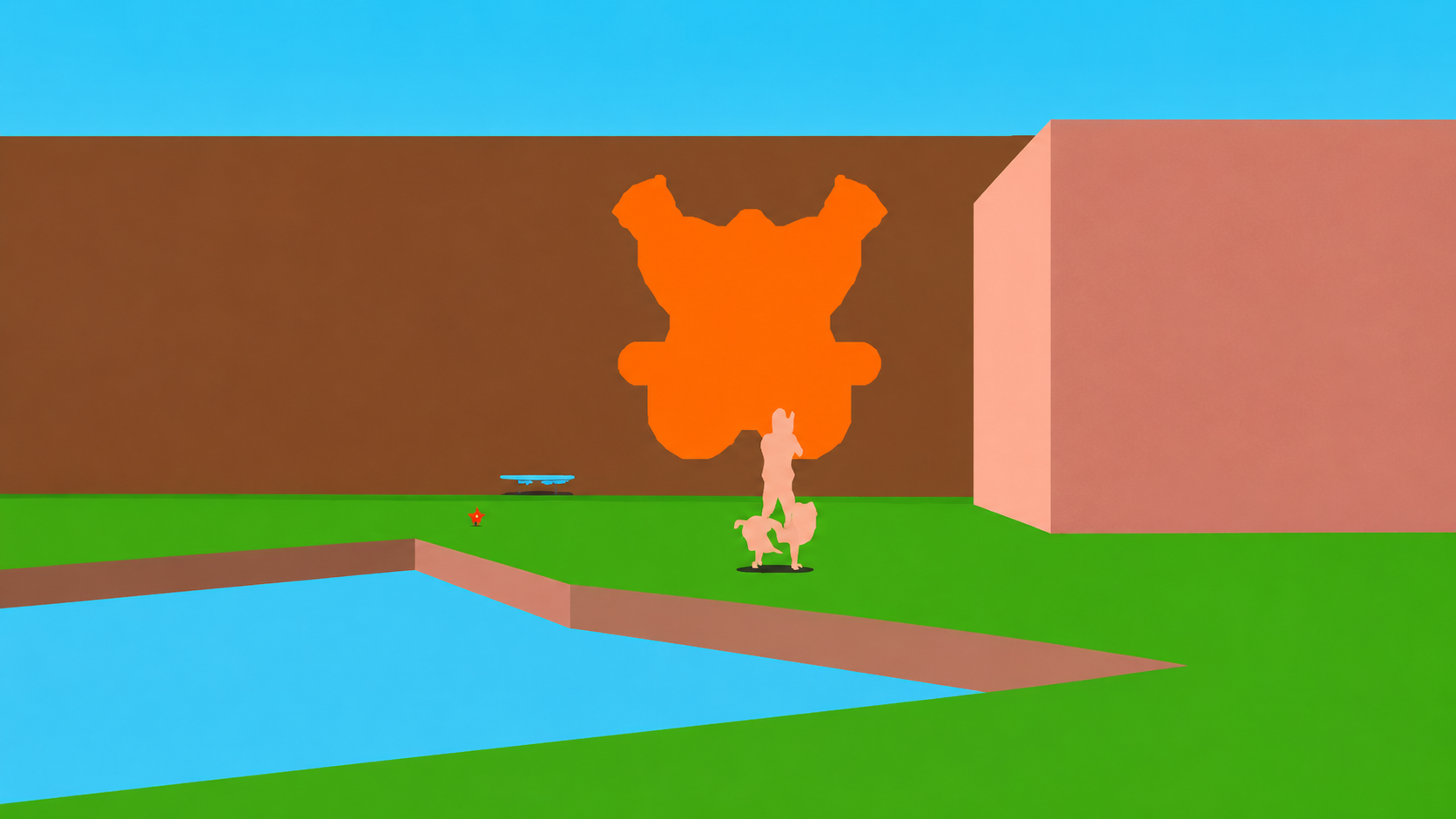
The Jan van Eyck Akademie in Maastricht has a permanent collection. Works made by residents during their time at the institution that the institution acquires and holds. In 1998, Emulation Edition became part of it.
I've spent some time thinking about what it means for a game to be in a permanent collection.
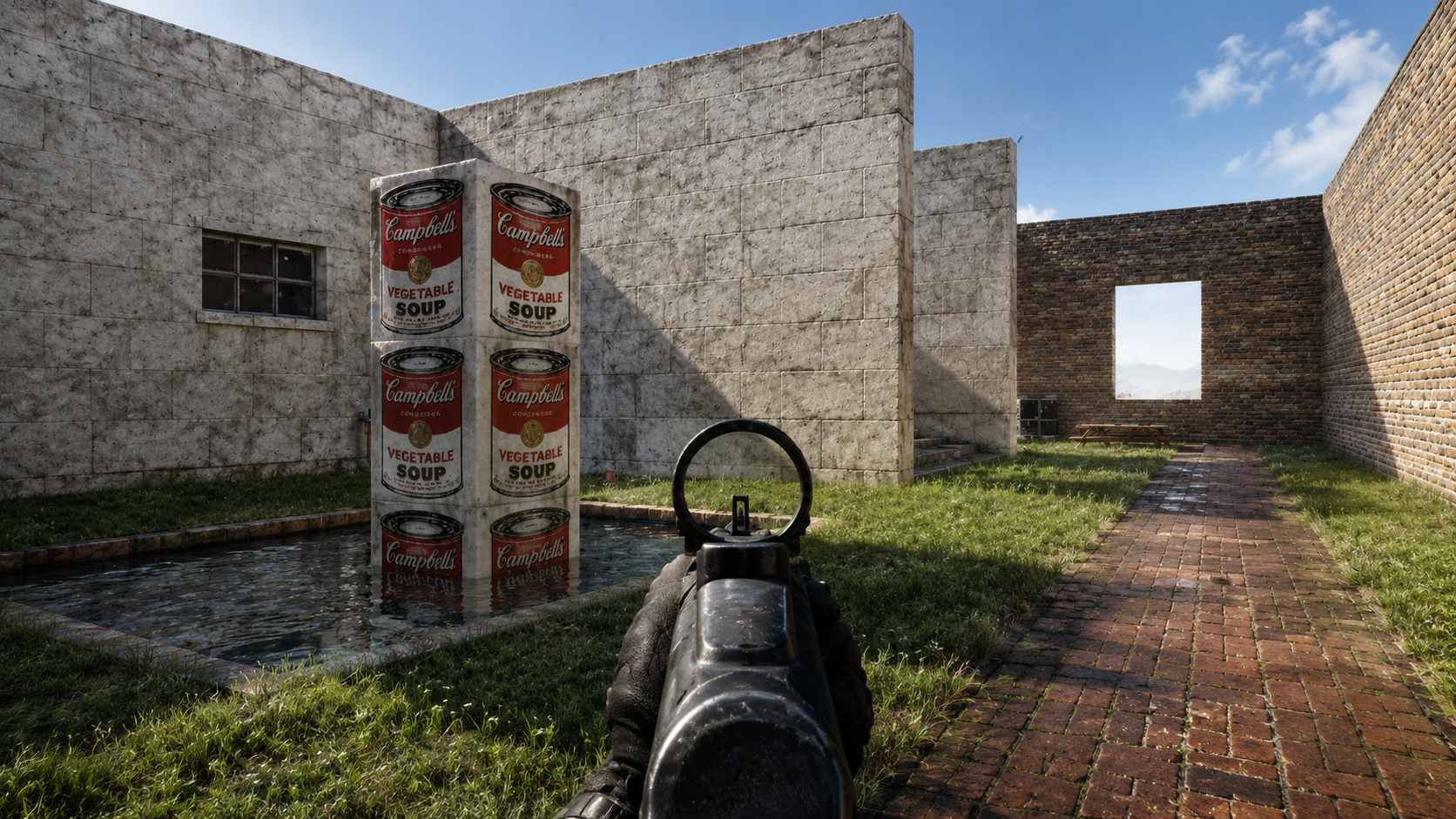
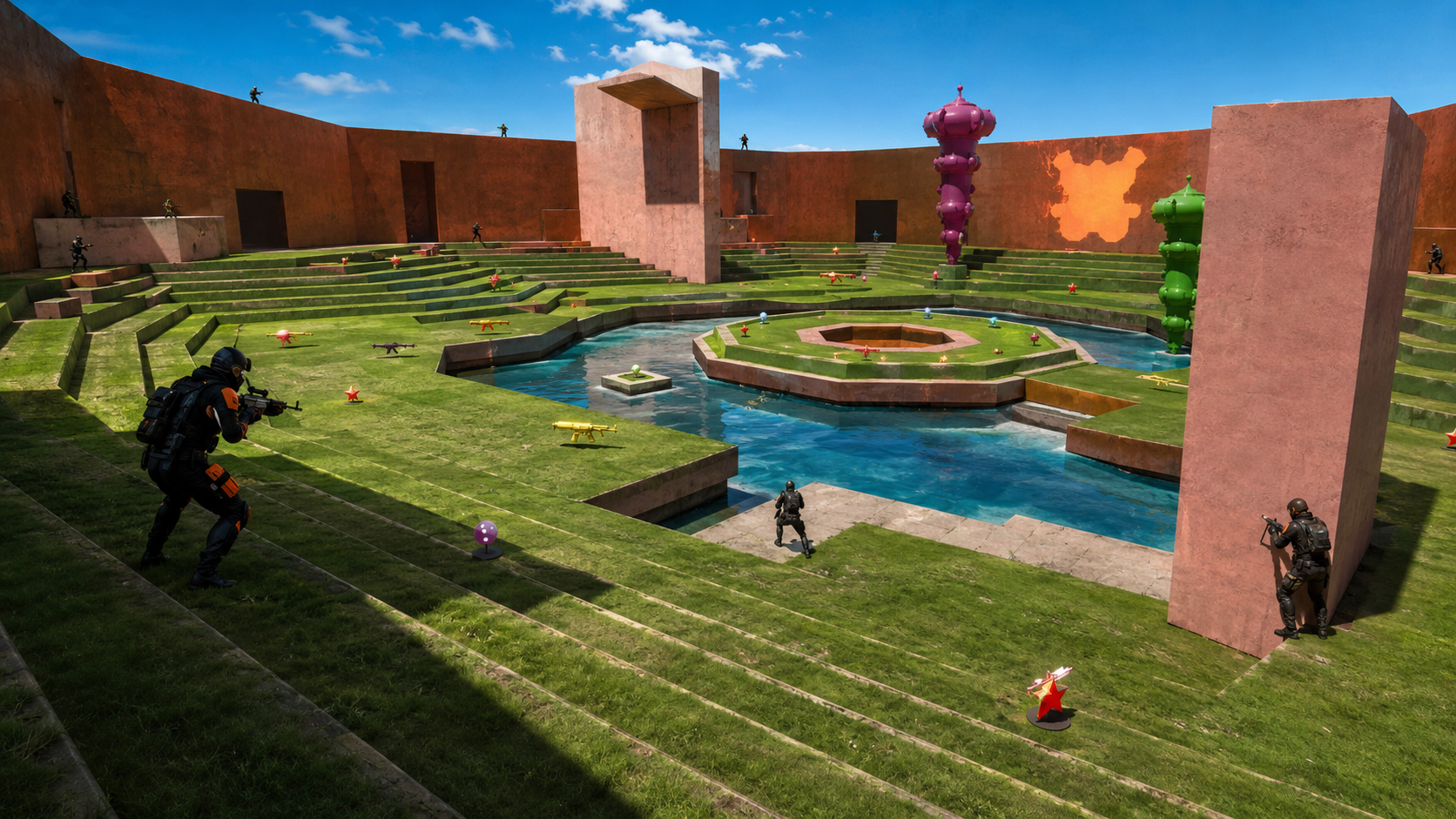
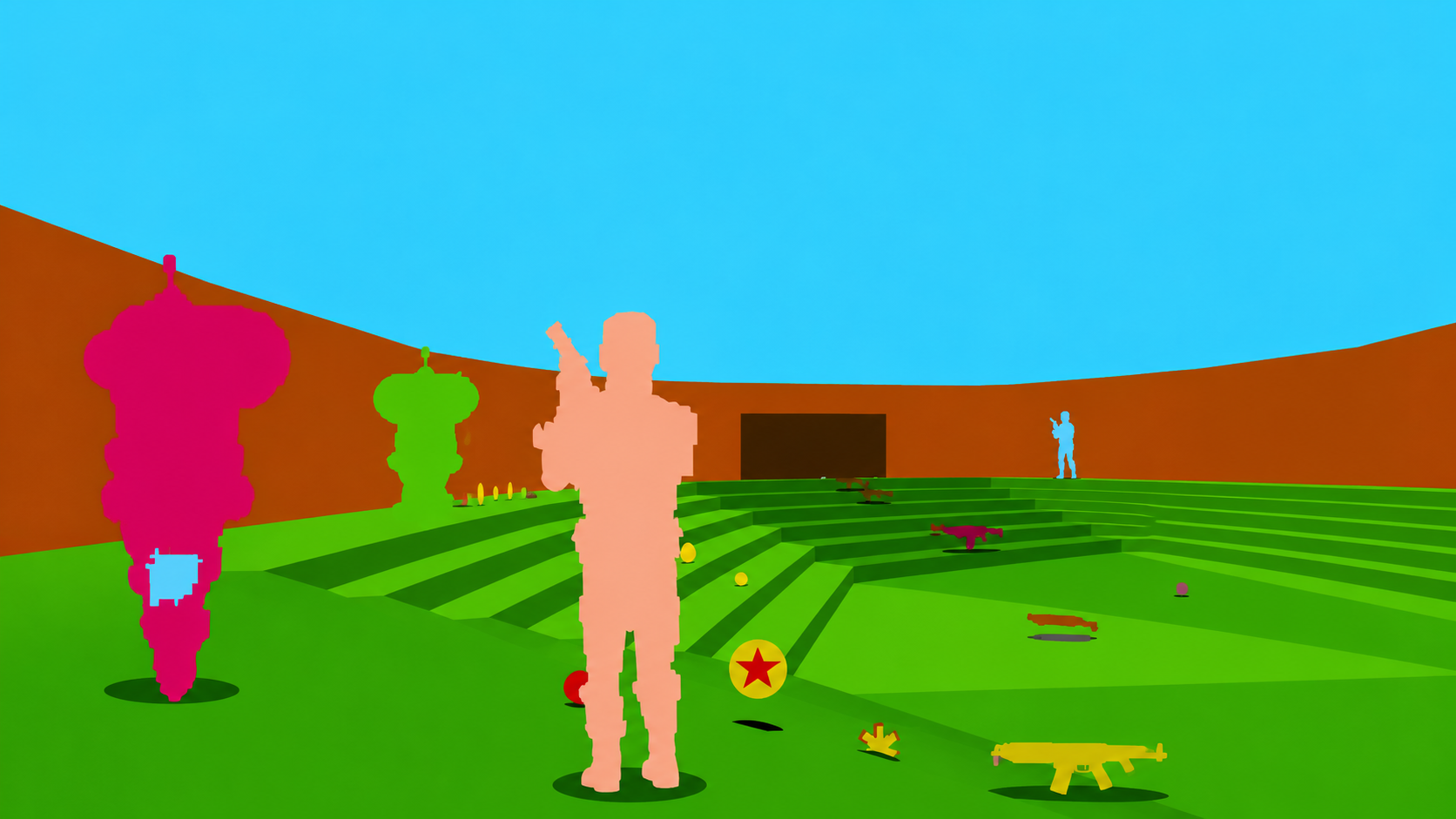
A painting in a collection is inert. You can look at it. The looking changes depending on the light, the viewer, the context, but the object itself is stable. It exists in time the way a stone exists in a river: the river flows around it, but the stone holds its form. A game in a collection is different. A game only exists in its execution. The twelve multiplayer levels of Emulation Edition were reduced to their core constituent parts, stripped of all realism, but they still required someone to play them. The work was not the disc. The work was what happened when the disc ran.
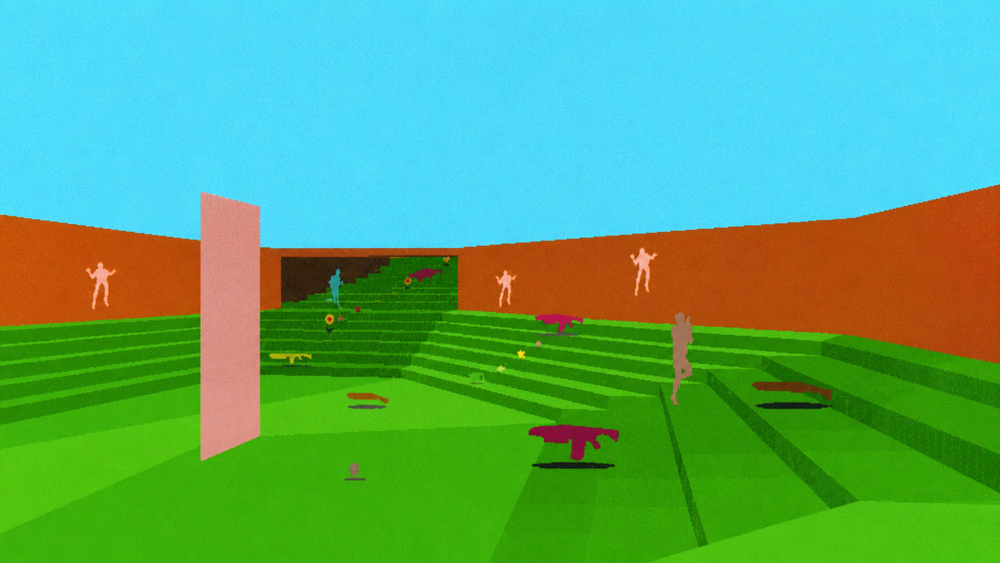
What the collection holds, then, is not Emulation Edition exactly. It holds the conditions for Emulation Edition. The capacity for the work to occur. This seems right to me now, though I didn't have the language for it then. The Jan van Eyck was not preserving a finished object. It was preserving an argument.
The argument had been two years in the making. It began with the CD-ROMs of the first year, moved through the Marathon levels of 1997, ran through Quake Radius and the network gaming environments, and arrived at Emulation Edition as its final statement. The statement was this: a game is its structure, not its surface. Strip away the realism, the narrative complexity, the production value, the cinematic ambition. What remains is a system of decisions operating in a defined space, and that system is the thing the game actually is.
Twelve levels. Twelve arguments for the same position. The multiplayer format was not incidental. It was essential. Emulation Edition was not a single-player experience, not a meditation, not a contemplative space. It was a competitive environment, which meant it required other people, which meant it required the live enactment of the system's logic by agents who were genuinely trying to use it against each other. The reduction to core constituent parts was more visible in that context than it would have been in a solo experience. When the environment offers no visual complexity to hide in, the game's underlying structure becomes the only thing. You can see what the system rewards. You can see what its rules actually allow. You can play the game as it actually is, rather than as it appears to be.
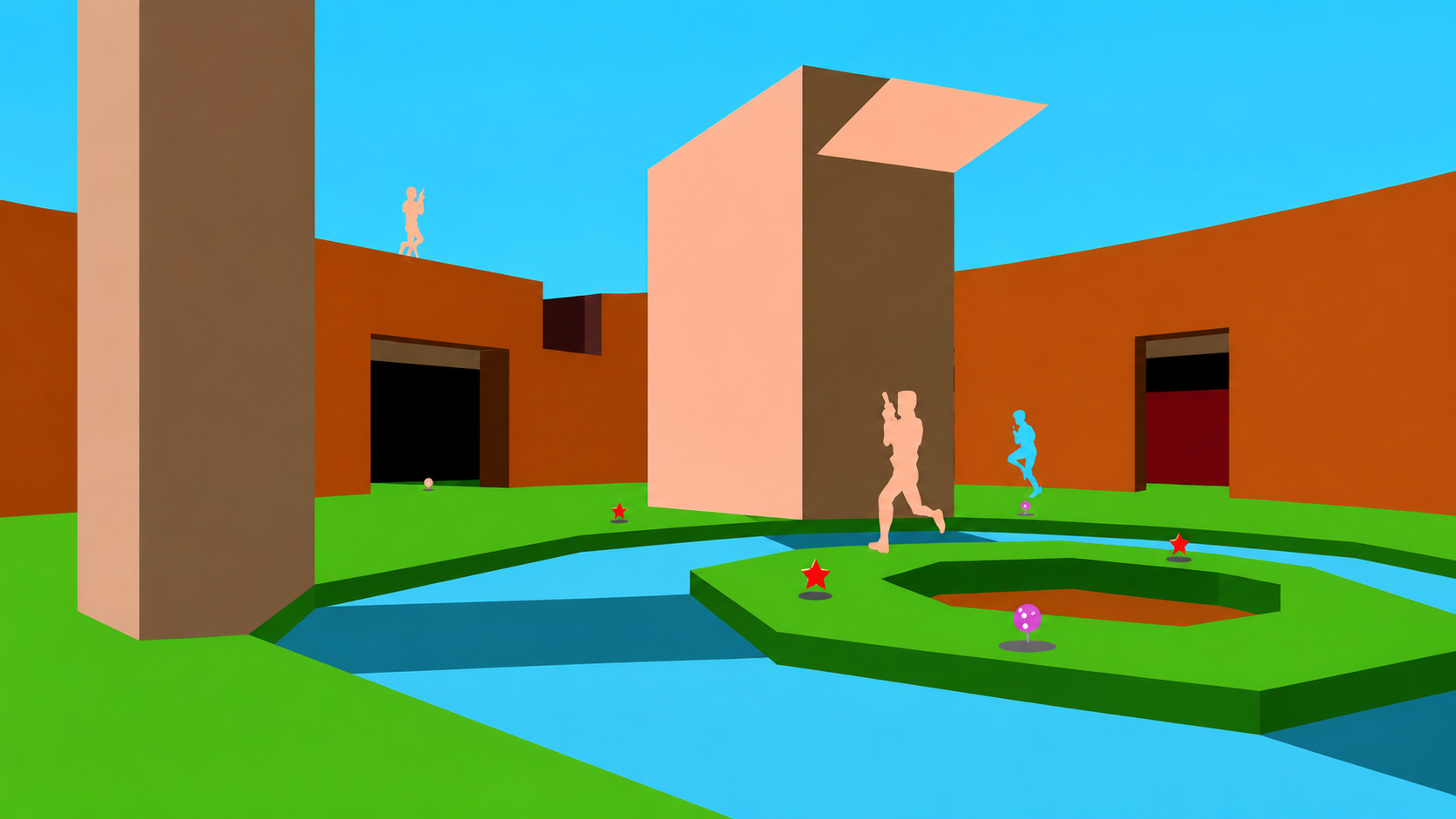
Apple Benelux supported the show. Bungie supported the show. That these companies, one making computers and one making games, would invest in a project devoted to arguing that games should be less immersive and more structurally visible is something I find quietly amusing now. I don't think either of them were endorsing the argument. They were supporting a show at an art academy that interested them. But their presence reframed the work. Emulation Edition was not a critique made from outside the industry. It was made by someone who cared about games, who had spent years with Bungie's tools, who had been shaped by the commercial context he was commenting on. The argument was internal.
Twenty-seven years later, I have played hundreds of games. Most of them nothing like Emulation Edition's stripped-back environments. The Assassin's Creed series, Death Stranding, Final Fantasy XVI, The Last of Us. These are maximalist works, built on the most sophisticated visual and narrative engines available, deeply invested in immersion, in cinematic production, in the emotional register of the literary novel. They are everything Emulation Edition was arguing against.
And yet the sessions they generate, accumulated across six hundred hours and counting, keep returning to the same questions the Jan van Eyck work was asking. What is the game actually doing under everything it is also doing? What is the system rewarding, and what does that reveal about what the experience is for? The epigrams that open each session are small attempts to name the game's structural logic. To say, beneath the forty hours of open world and the elaborate narrative of Norse mythology or Eikon power or post-collapse America, this is the argument. This is what the system is.
The Jan van Eyck gave me the tools to ask that question. Emulation Edition was the form the question took in 1998. Arclight/Matt is the form it takes now. The permanent collection holds the argument. The practice is its continuation.