Prime Target: The Definitive History
The Inheritance Problem
In late 1995, Bungie did something unusual for a games studio of the period. They licensed their engine. Marathon 2: Durandal had shipped in November of that year and represented, by any technical measure, the apex of Mac-native FPS development. The engine could handle liquids, ambient positional audio, scripted teleportation, and a multiplayer suite that included cooperative campaign play, features that PC games were still catching up with. Within the next few years, Marathon 2's engine was officially licensed by other developers to create the games ZPC, Prime Target and Damage Incorporated. All but Prime Target received a Windows release. Three teams. Three interpretations of the same toolkit. The divergence between them is the sharpest way to understand what Prime Target was, and why it disappeared.
When id Software licensed the Doom engine, the resulting games, Heretic, Hexen, Strife, all understood they were inheriting a vocabulary. The engine carried meaning. It implied corridor space, it implied momentum, it implied the interplay of darkness and revealed light. Games built on it either worked with that meaning or worked against it. The interesting ones did both.
The Marathon 2 engine carried different meaning. It implied a kind of architectural seriousness. Levels that functioned as spaces with relationships between rooms, floors, liquids, heights. It implied a narrative mode. The terminal, the text, the world told through documents you encountered rather than cutscenes you watched. It implied, above all, a kind of loneliness. Marathon's player is isolated, unreliable, uncertain of what the AIs are telling them. The engine's spatial logic, the way its rooms turn back on themselves, the way information is distributed through the environment, supported that experience. The three teams who licensed it each inherited this toolkit and decided, implicitly or explicitly, what to keep.
What ZPC Inherited
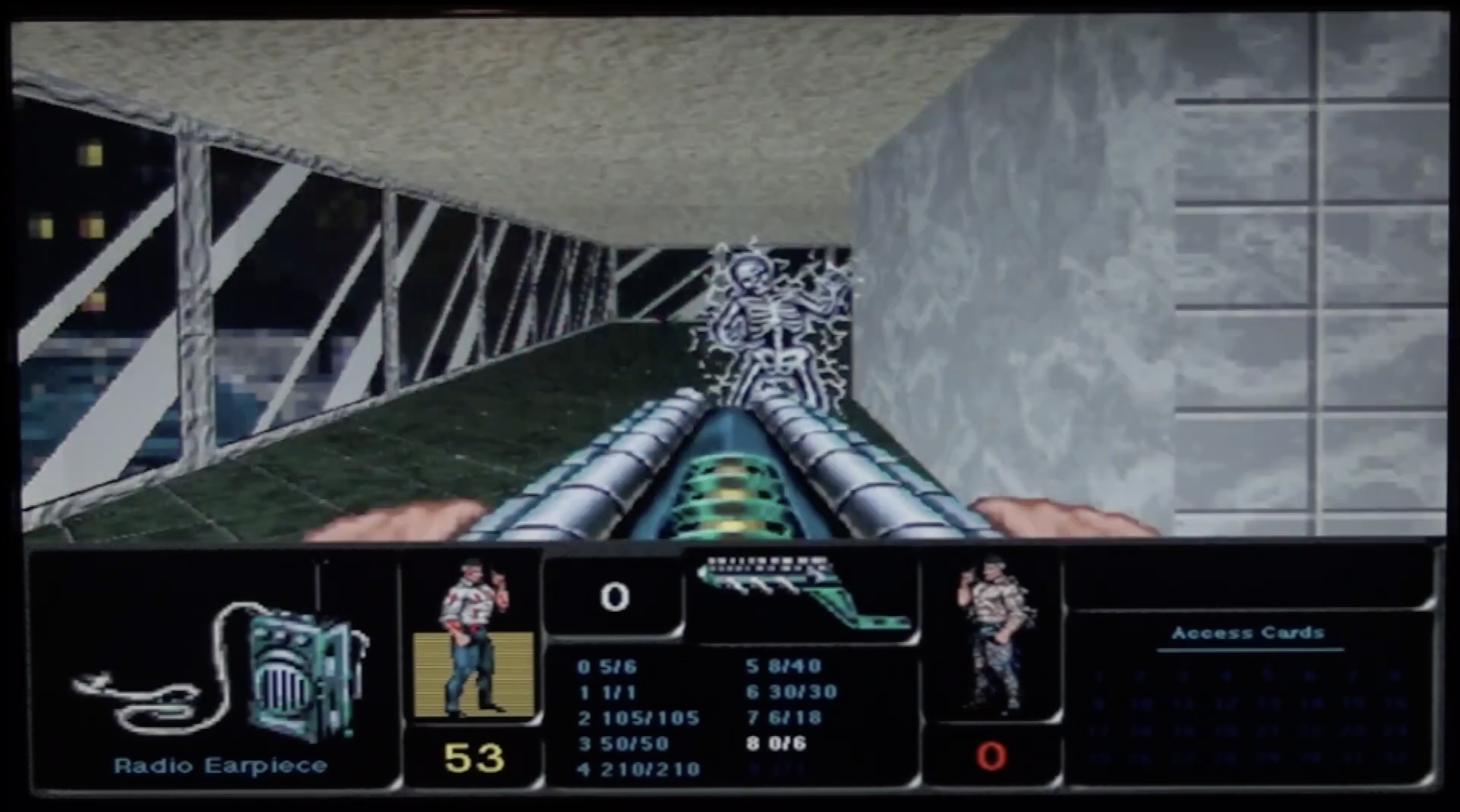
ZPC was developed by Zombie Studios and published by GT Interactive in December 1996, two months after Prime Target. It is the most celebrated of the three licensed games, and the reason for its reputation is instructive. ZPC features a stylized pulp comic book art style from Aidan Hughes, who was then known for his album covers for the industrial band KMFDM and for the magazine BRUTE!, and a soundtrack from Paul and Roland Barker, both known for their involvement in the industrial metal band Ministry. ZPC understood the Marathon engine as a surface. A grid onto which a completely different visual logic could be imposed. The engine's geometry became the armature for Hughes' thick-outlined, high-contrast, politically charged imagery. The ZPC designers deliberately structure many sequences to offer the player several options, inaction being one of them, and then show them the results of the choice made. It retained Marathon's moral seriousness while replacing its aesthetic entirely. The inheritance was ideological. Keep the loneliness, keep the ambiguity, discard the science fiction.
What Damage Incorporated Inherited
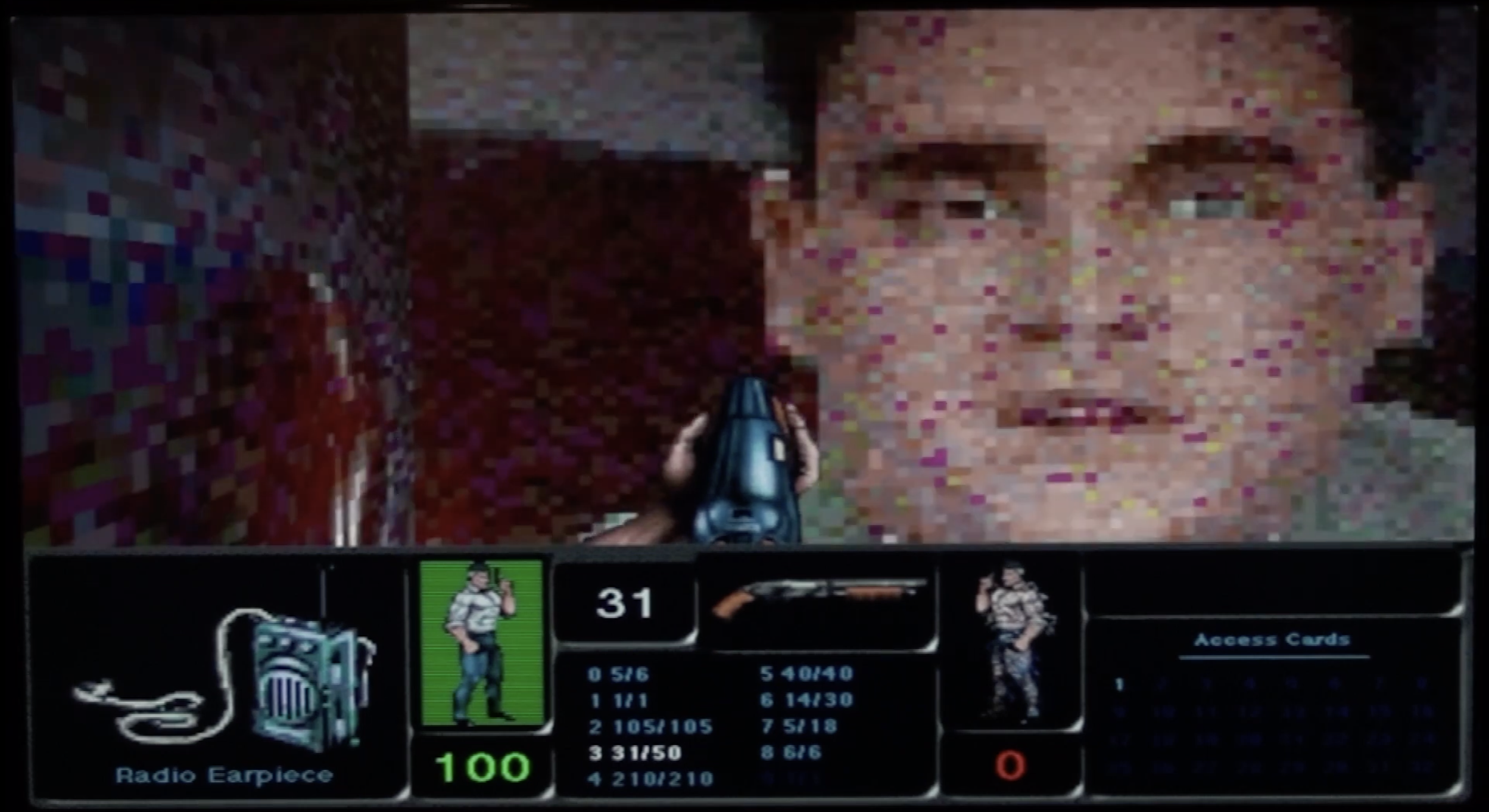
Damage Incorporated, developed by Paranoid Productions and published by MacSoft in 1997, made the opposite move. Damage Incorporated blends tactical strategy with the fast-paced action of a first-person shooter, tasking players with leading a four-member US anti-terrorist squad against paramilitary threats, emphasising planning and coordination, requiring players to issue commands and orchestrate their marines' movements to succeed. The key insight of Damage Incorporated's design is that it identified the one thing the Marathon engine did that most FPS engines of the period didn't: it modelled space as genuinely three-dimensional, with relationships between rooms that could be navigated tactically rather than simply traversed.
Commanding a fire team through that space is a natural extension of the engine's spatial logic. The inheritance was architectural. Keep the three-dimensional room relationships, discard the loneliness, replace the single player with a squad. Damage Incorporated was likely the first first-person shooter to have the player command a fire team of NPCs. It anticipated Rainbow Six by a year.
What Prime Target Inherited
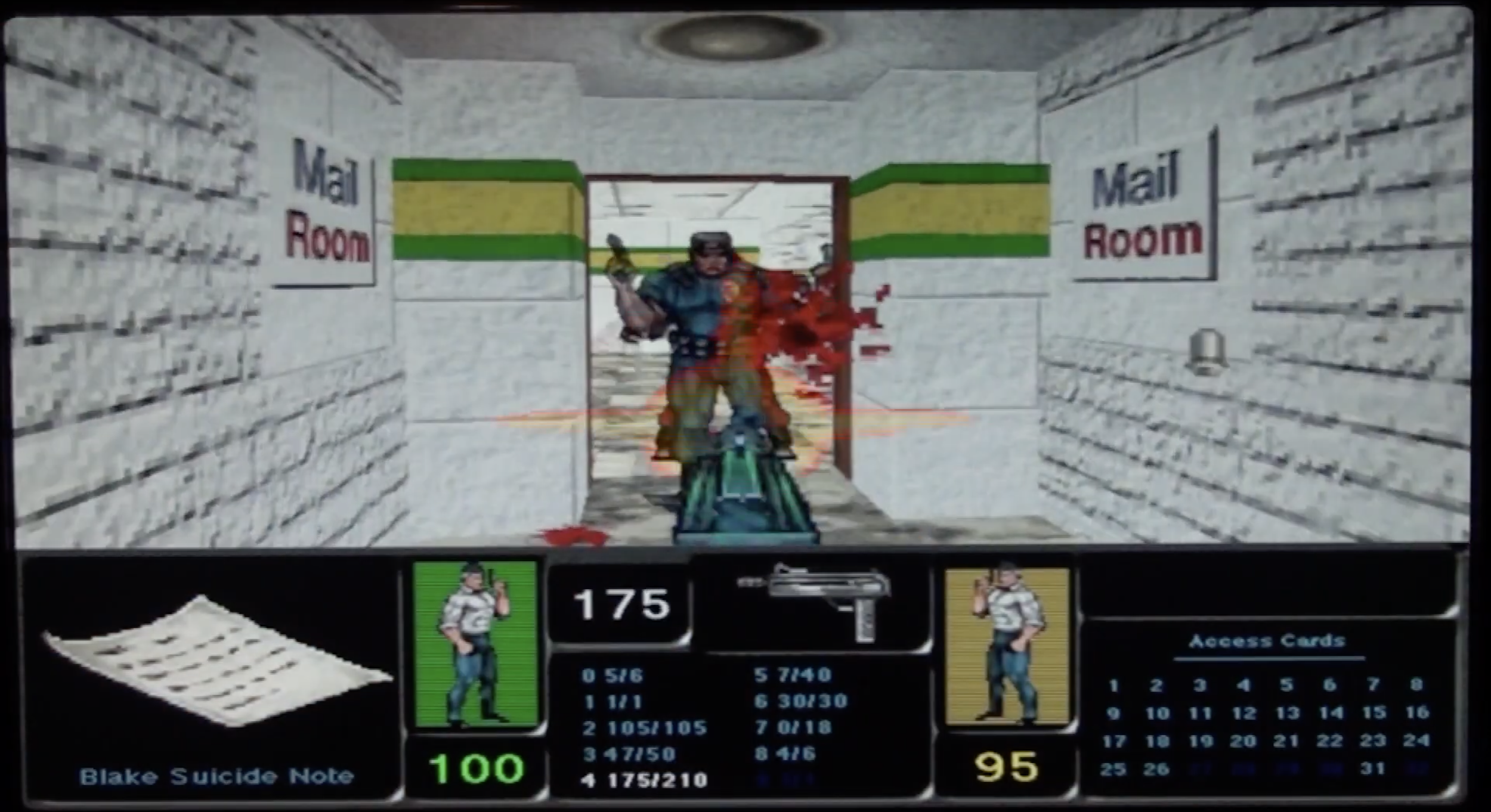
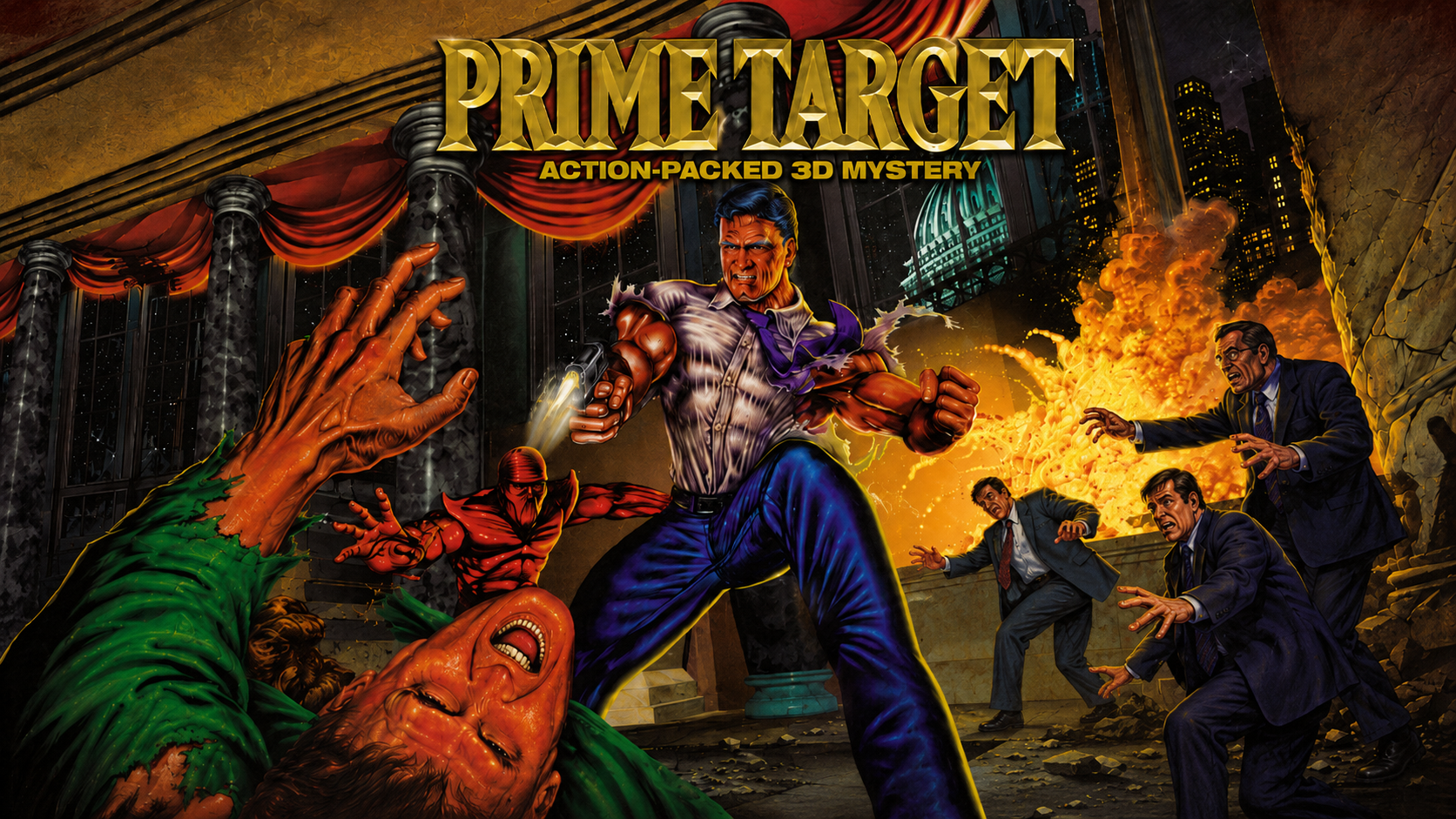
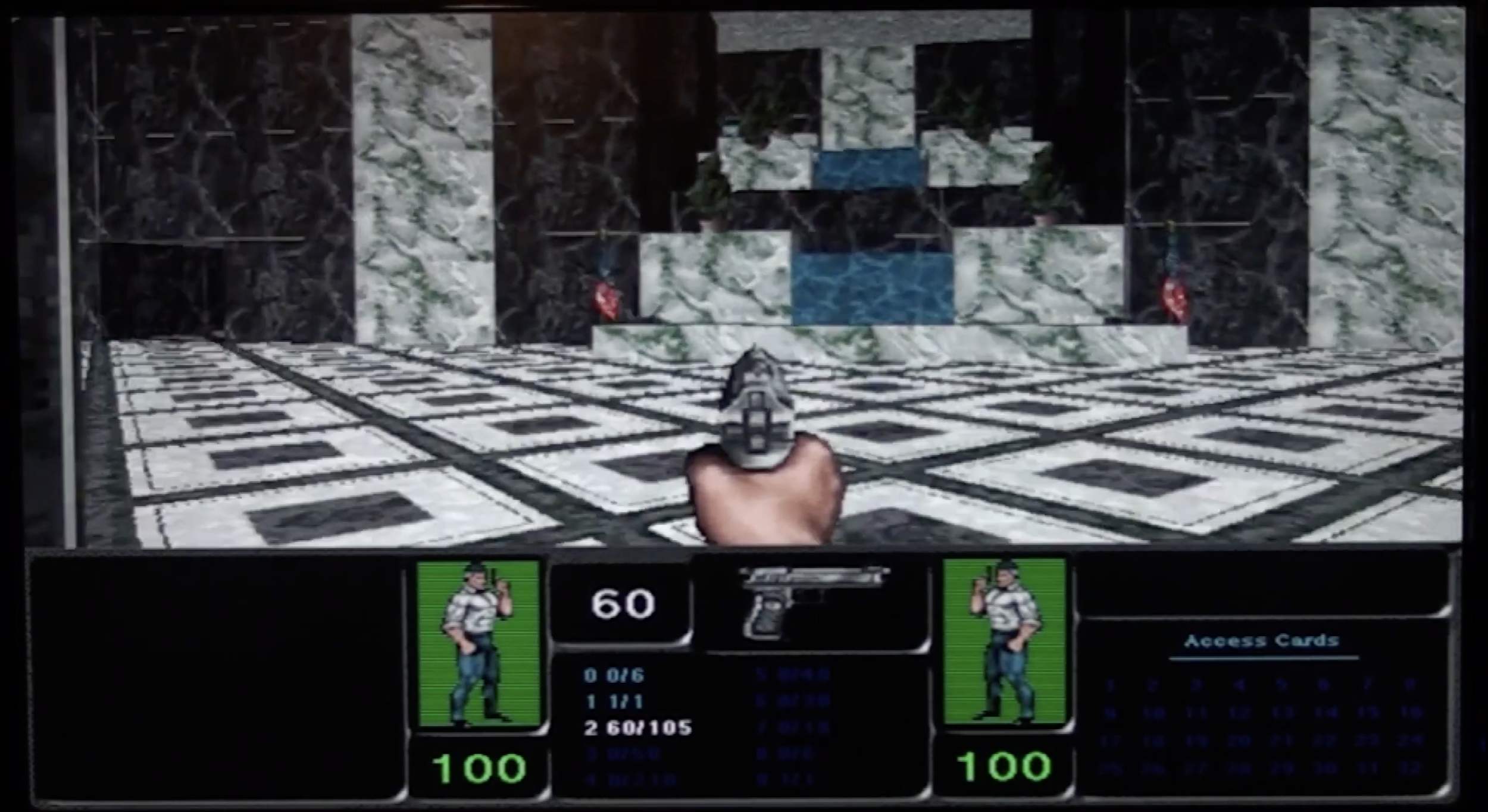
Prime Target, developed under lead developer Kirk Sumner at WizardWorks and published by MacSoft in October 1996, did something more interesting and less legible than either of its counterparts. It tried to inherit the engine's spatial logic while replacing everything else. The science fiction setting, the AI narrators, the abstract alienness, the isolation. In their place it put Washington DC, a murdered senator, a political conspiracy, office furniture.
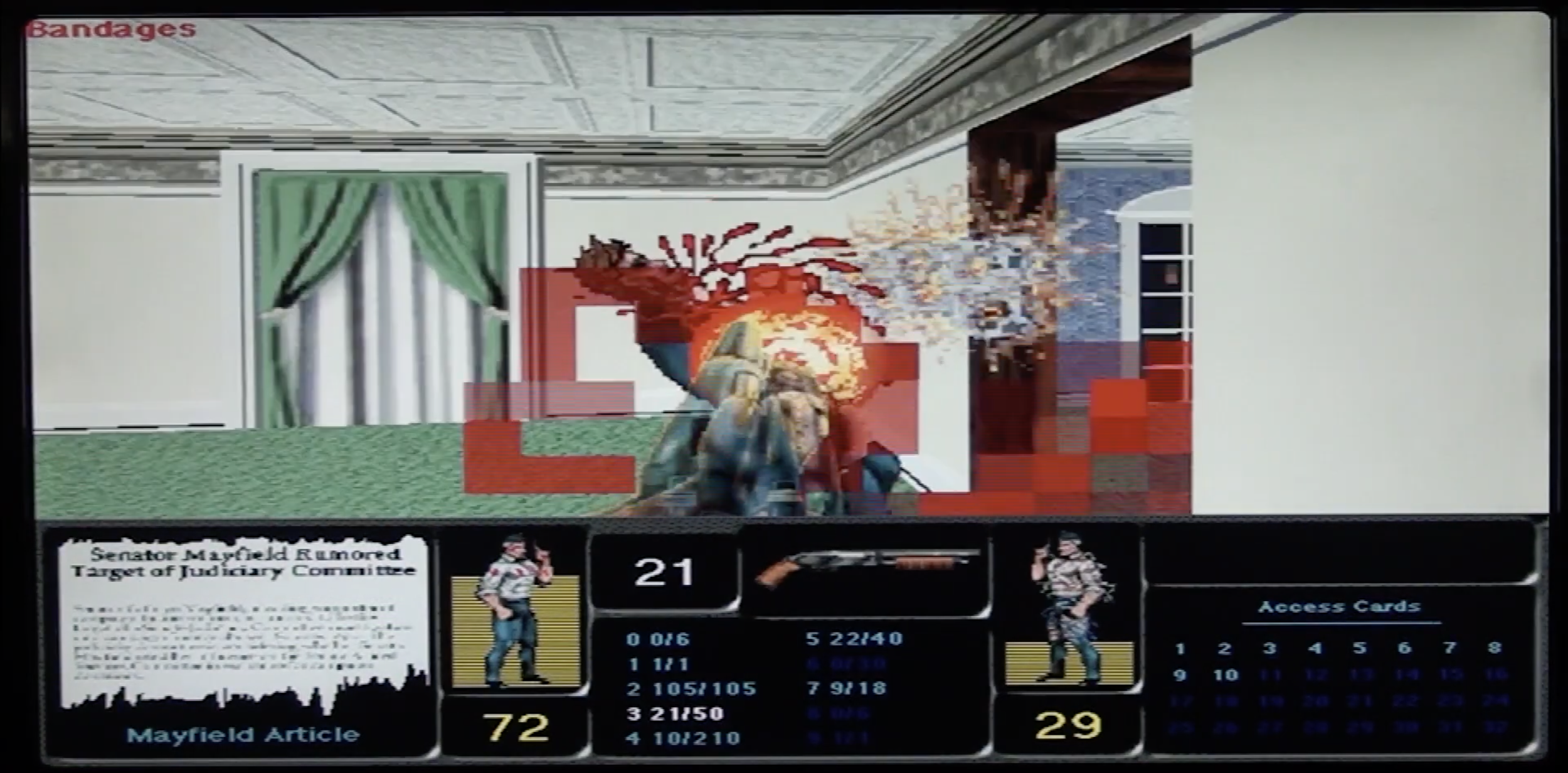
The design ambitions are real. Prime Target adds many new features to the Marathon engine, including ducking, breaking glass, bullet-holes and blood splashes on doors and walls, many new kinds of access cards, swinging doors, and most importantly, movable objects and non-linear play. Movable furniture, the ability to push desks against doors, was not a feature of any FPS shipping in 1996. The non-linear access card structure, which required returning to earlier parts of the building to use newly obtained keys, anticipates the spatial logic of games that wouldn't arrive for years. Ducking behind cover, using the environment as a tactical resource rather than a backdrop, these are forward-looking decisions.
The setting is equally interesting on its own terms. Prime Target imagines a near-future 2004 presidential election as the backdrop for a conspiracy thriller. A senator is assassinated. Her office building is occupied by mercenaries. There are, inexplicably, ninjas. The fiction is genre pastiche, Die Hard by way of Under Siege, but it commits to a claim that Marathon's architecture wasn't inherently science-fictional. That offices and corridors and parking garages are as valid a spatial argument as alien ships and planetary ruins. That the access card logic, the way permissions and locked doors structure movement through a space, maps naturally onto Washington DC political architecture.
This is the game's actual thesis, and it is not a trivial one. Marathon's levels are built around the idea that space communicates authority. Who controls what doors, who has access to what terminals, who can go where and why. Translating that onto a Senate office building in the middle of a political crisis is a coherent move. The building's geography becomes the conspiracy's geography. The access cards become the documents. The terminals, in Marathon, told you what the AIs wanted you to know. In Prime Target, the documents you collect tell you what the senator knew before she was killed. The problem is that none of this is playable.
Prime Target's mouse driver is thoroughly hosed, utterly nonfunctional, and takes a big measure of enjoyment out of what is a really fun game. Unfortunately, there is no mouse patch, and none forthcoming, ever. In October 1996, Quake had been shipping for four months. Quake's mouse-look, fluid, precise, the direct physical expression of the player's attention in three-dimensional space, had already redefined what FPS movement felt like. The gap between Quake's controls and Prime Target's broken mouse driver is not a matter of technical preference. It is the difference between a game that communicates through space and a game that describes space while refusing to let you inhabit it.
This is where the inheritance failed. ZPC and Damage Incorporated both understood, at some level, that what the Marathon engine was for. The thing that made it more than a rendering toolkit, was its relationship between the player's body and the architectural logic of the level. ZPC replaces the aesthetic entirely but keeps the spatial grammar. Damage Incorporated redesigns the player relationship entirely but keeps the spatial grammar. Prime Target redesigns the aesthetic and the player relationship simultaneously, and then breaks the mechanism by which the player reads space at all.
The movable furniture is compelling precisely because it can't be used properly. You can push a desk in front of a door, in theory. Doing so with keyboard-only controls, with no fluent relationship between your line of sight and your movement, while mercenaries are shooting at you, is not a tactical decision. It is an ordeal. The design's most interesting idea becomes its most frustrating implementation.
The Context That Ended It
WizardWorks was founded in 1980, and in 1993 opened the CompuWorks and MacSoft divisions. In 1996, WizardWorks was acquired by GT Interactive to become part of their GT Value Products umbrella. Prime Target was completed and published in the same year as this acquisition, which means it was developed at the moment its publisher was transitioning from independent operation to budget-gaming subsidiary of a larger entertainment company. Whether the broken mouse controls were a consequence of compressed development time under new ownership, or a pre-existing technical debt that nobody fixed because the MacSoft production process lacked the infrastructure to address it, is unrecorded.
What is recorded is that the Mac gaming market Prime Target was built for was already ending. Microsoft hastened the Mac's demise in gaming by acquiring RenderMorphics and repackaging its Reality Lab 3D API as Windows 95's DirectX in 1996, tying PC gaming to Windows. Apple was eighteen months from near-bankruptcy. The window in which a Mac-exclusive FPS could find a meaningful commercial audience had opened in 1994 with the first Marathon and was closing by the time Prime Target shipped. Bungie itself was already planning to move beyond the Mac platform; two years later they would be acquired by Microsoft and Marathon would become the genetic material of Halo. All but Prime Target received a Windows release. The absence of a Windows port sealed Prime Target into the shrinking Mac market with no way out.
The game's mediocre sales are overdetermined. Broken controls, wrong platform, wrong moment, wrong publisher infrastructure. An arcade port was developed and underwent location testing at a Champions Arcade in the Philadelphia area during 1997, but was never fully released. This is the one detail in Prime Target's history that remains genuinely inexplicable. Someone believed a Mac FPS with a broken mouse driver and middling sales was the right game to adapt for arcade hardware. The phantom arcade cabinet that tested in Philadelphia and then vanished is the perfect symbol of the game's commercial life. An attempt to find an audience outside the shrinking niche where it had been confined, arriving too late, the mechanics presumably no more solved than they were in the home version, and then disappearing entirely.
What the Thinness of the Record Means
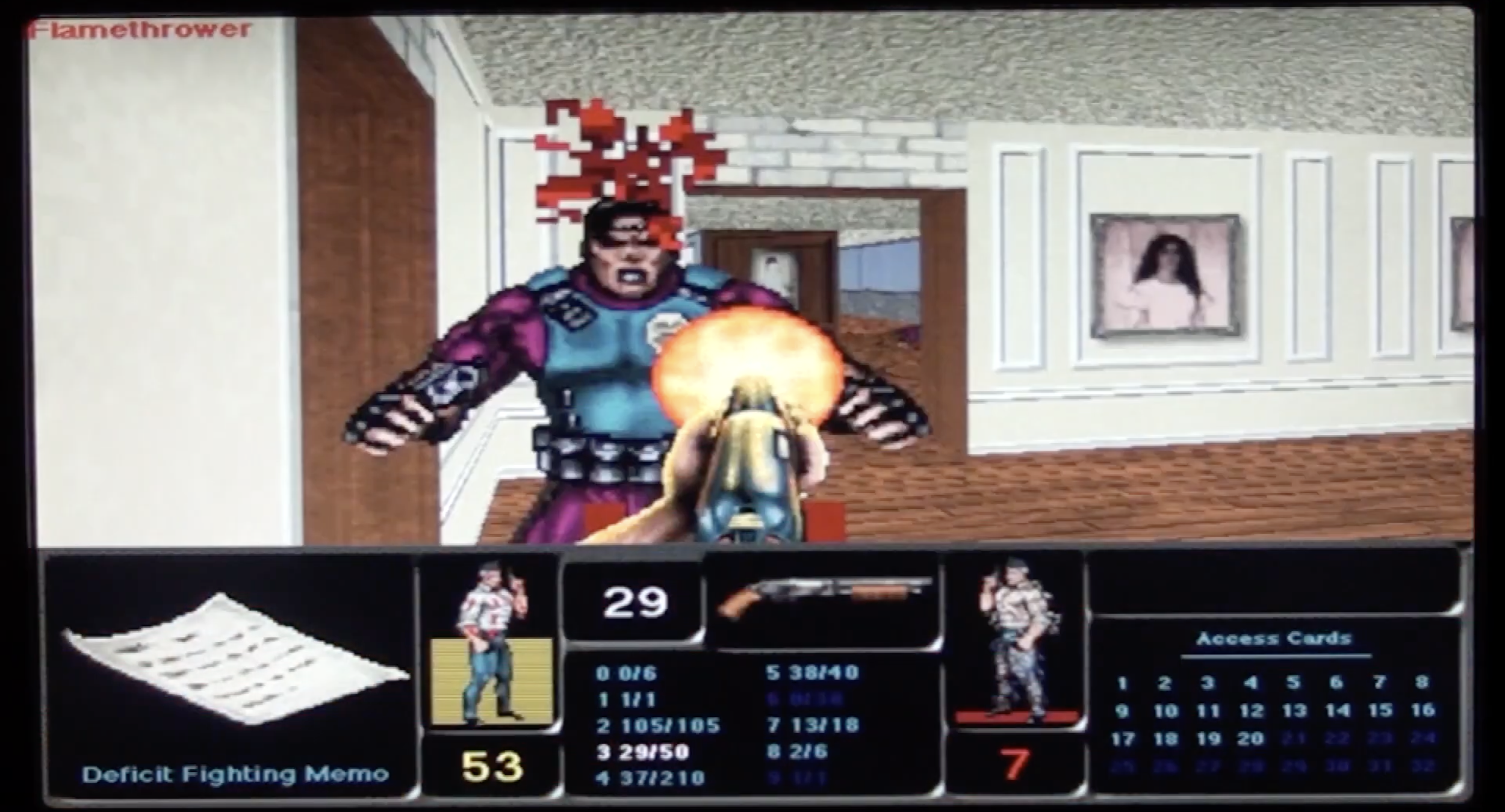
The research record for Prime Target is unusually sparse. Kirk Sumner is named as the team lead in a single Gamasutra contractors page, which no longer resolves. There are no developer interviews. The contemporary reviews are partially archived. The French Joystick review from February 1997 exists but is not in English. The Inside Mac Games review from June 1997 is archived but brief. There is a MacGate review from 1998, a MacHome review from 2000, and a scattered thread on Macintosh Garden where emulation users in the early 2010s compare versions, troubleshoot crash bugs, and argue over whether the available download is the full game or the demo.
This sparseness is not simply a function of the game's commercial failure. ZPC also sold modestly and has a substantially richer critical record. Damage Incorporated received a four-star review in Next Generation and is recoverable in some depth. The difference is that both of those games had identifiable artistic ambitions. Hughes' visual system in ZPC, Rouse's tactical design in Damage Incorporated gave critics and later historians something to discuss. Prime Target's ambitions were structural, embedded in the design, and they were invisible beneath the broken surface.
This is the permanent frustration of games that fail at the level of execution rather than conception. The design argument, that Marathon's spatial logic could be transposed to a contemporary political thriller, that office buildings and access cards and locked documents were a natural fit for an engine built around navigating spaces by accumulating permissions, was not wrong. The movable furniture, the non-linear access cards, the cover mechanics, these are not marginal features. They are a coherent design philosophy. The game that these features describe is interesting. The game that was shipped is not.
Position
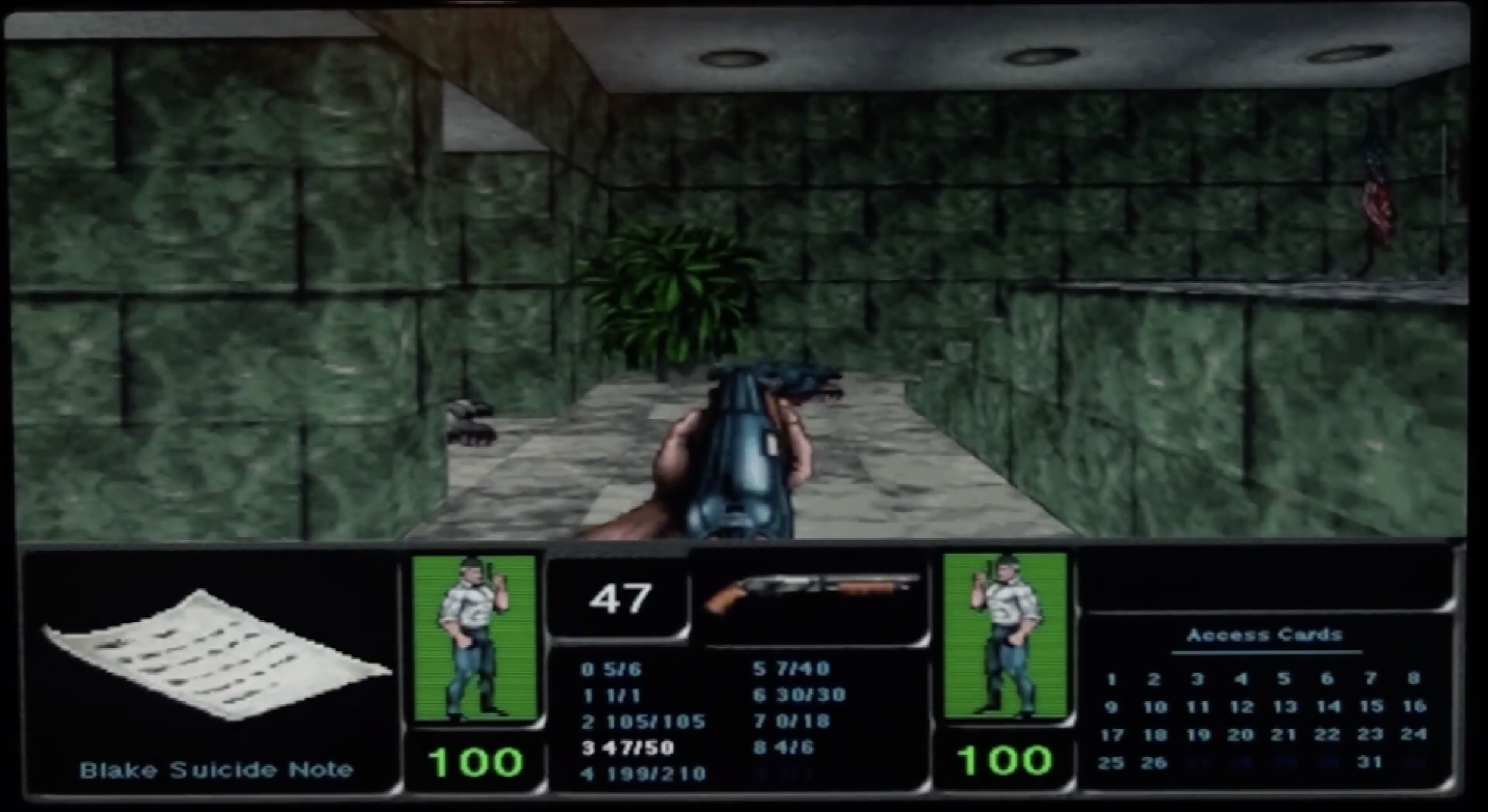
Prime Target is not, finally, a victim of its moment. The wrong game for the wrong platform at the wrong time. That reading is available and accurate, but it is also too comfortable. It lets the game off the hook for its own failure and lets WizardWorks off the hook for shipping broken software.
Prime Target was made by people who had read the Marathon engine correctly. Who had identified what it was structurally capable of beyond science fiction and alien architecture, and who failed to deliver the one thing that would have made that reading legible. The mouse driver. Not a design failure. An execution failure. The insight was sound. The game was not.
ZPC and Damage Incorporated are remembered because their makers understood that a licensed engine is not just a technical toolkit. It is a set of creative constraints and affordances that demand interpretation. Both games built explicit arguments about what the Marathon engine meant and used every element of their design to make those arguments visible. Prime Target built an argument too, but buried it beneath keyboard-only controls in a year when mouselook had already become the genre's language.
What remains is a design document that never became a game. The movable furniture. The access cards. The Senate office building. The 2004 election. The ninjas, which are their own small mystery. And somewhere in a Philadelphia shopping centre in 1997, a cabinet that nobody now remembers, running software that probably still didn't let you move the mouse.