The Museum in the Arena
The summer of 1997, I spent three months in Phoenix, Arizona. It was the gap between my first and second years at the Jan van Eyck Akademie, and it was the summer I found Bungie.
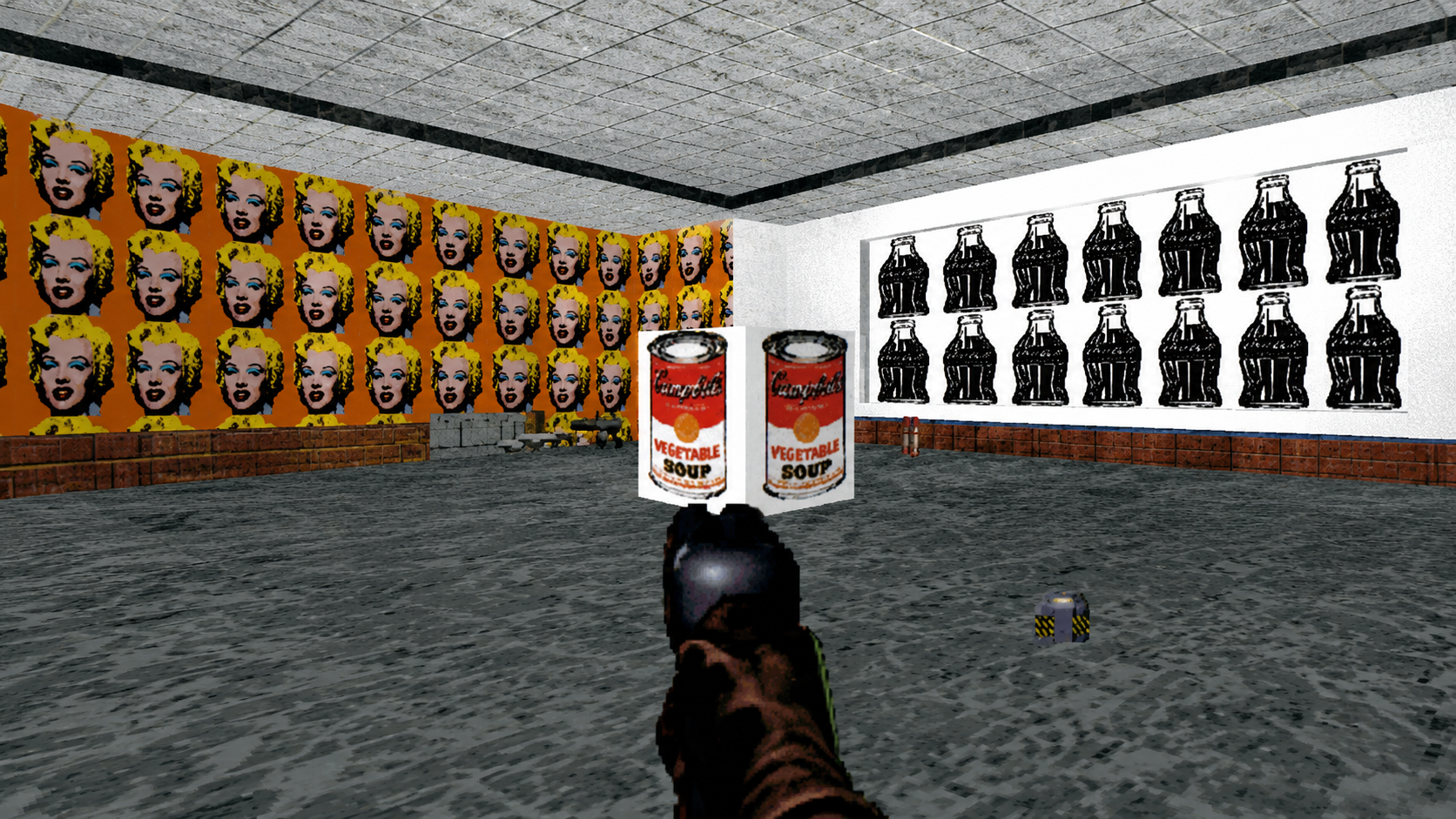
Not Destiny. Not Halo. Marathon. The 1994 first-person shooter that had been something of a cult among Mac users and design people, and whose level-editing and physics tools, Forge and Anvil, were the most sophisticated creative environments I'd encountered for making games. Forge let you build environments. Anvil let you alter the physics of the objects inside them. Together they opened a possibility I hadn't fully seen before: the game as design medium, not just design object.
I had spent my first year at Jan van Eyck making CD-ROMs. The CD-ROM was the art medium of that particular moment. A way of producing interactive work with full creative control, packaging it, distributing it, exhibiting it. I'd made typographic experiments, multi-screen environments, interactive image systems. All of it was interesting. None of it had the quality I was looking for, which was simultaneous presence. Multiple people in a space at the same time, acting on each other.
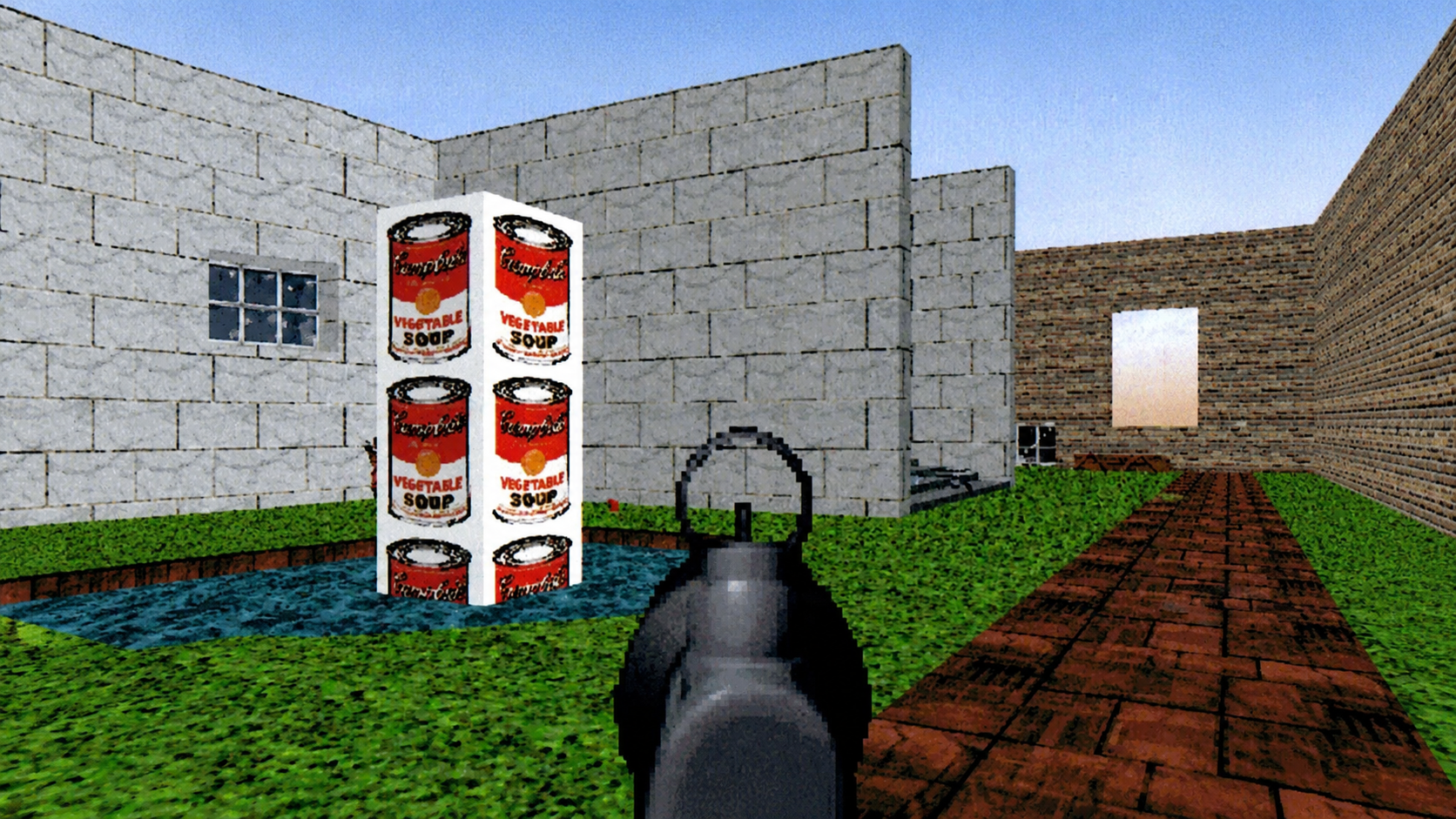
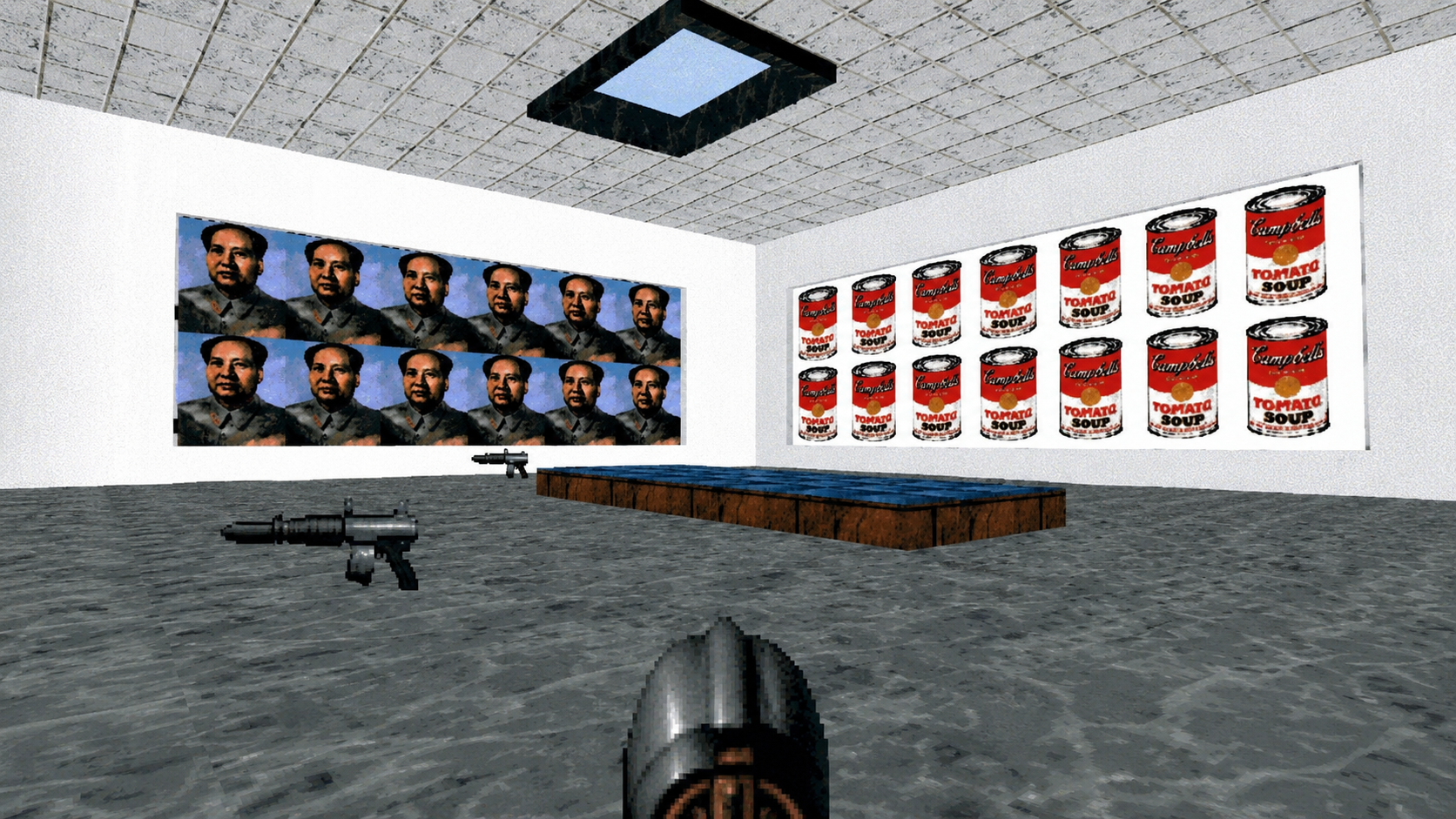
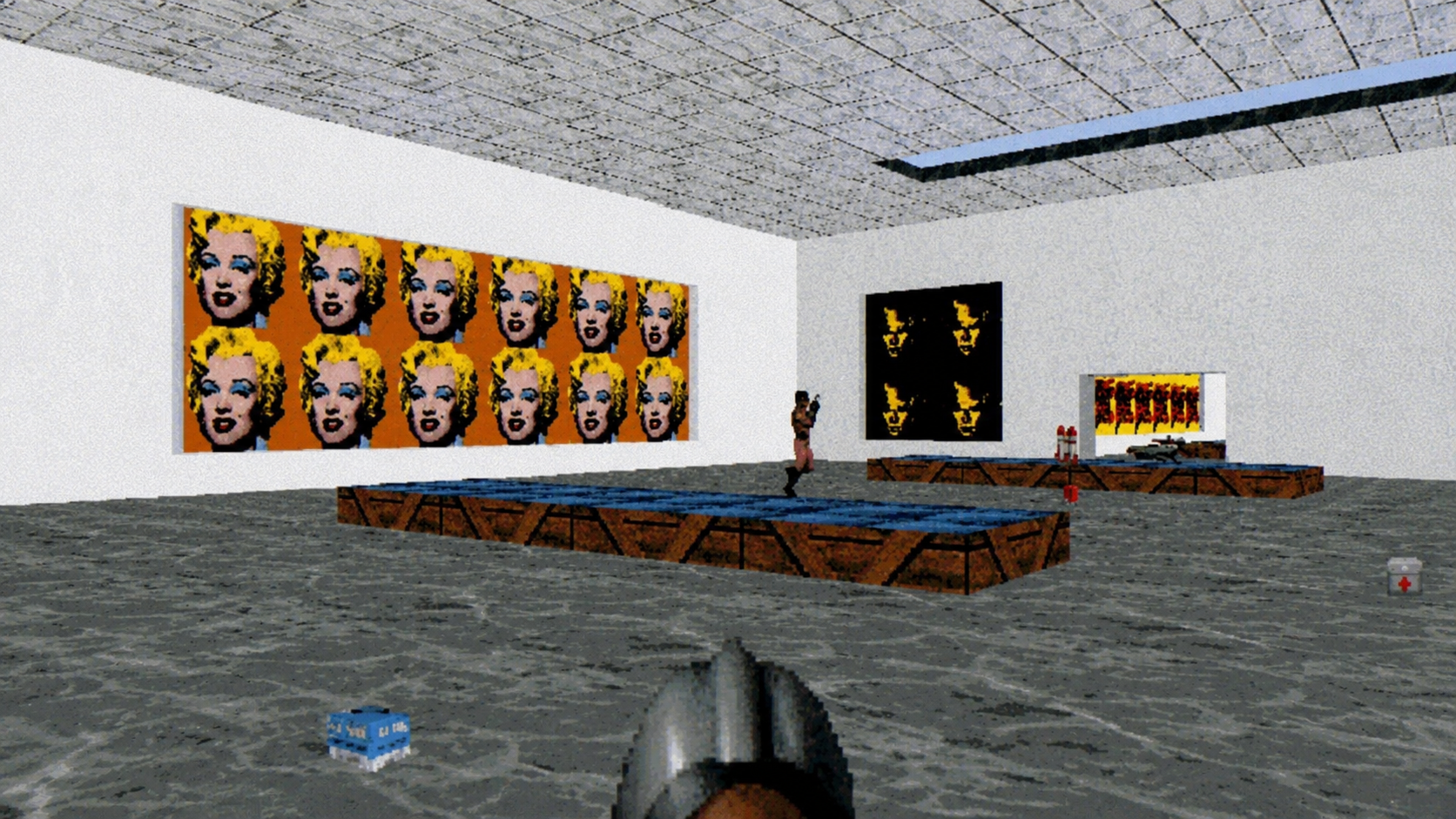
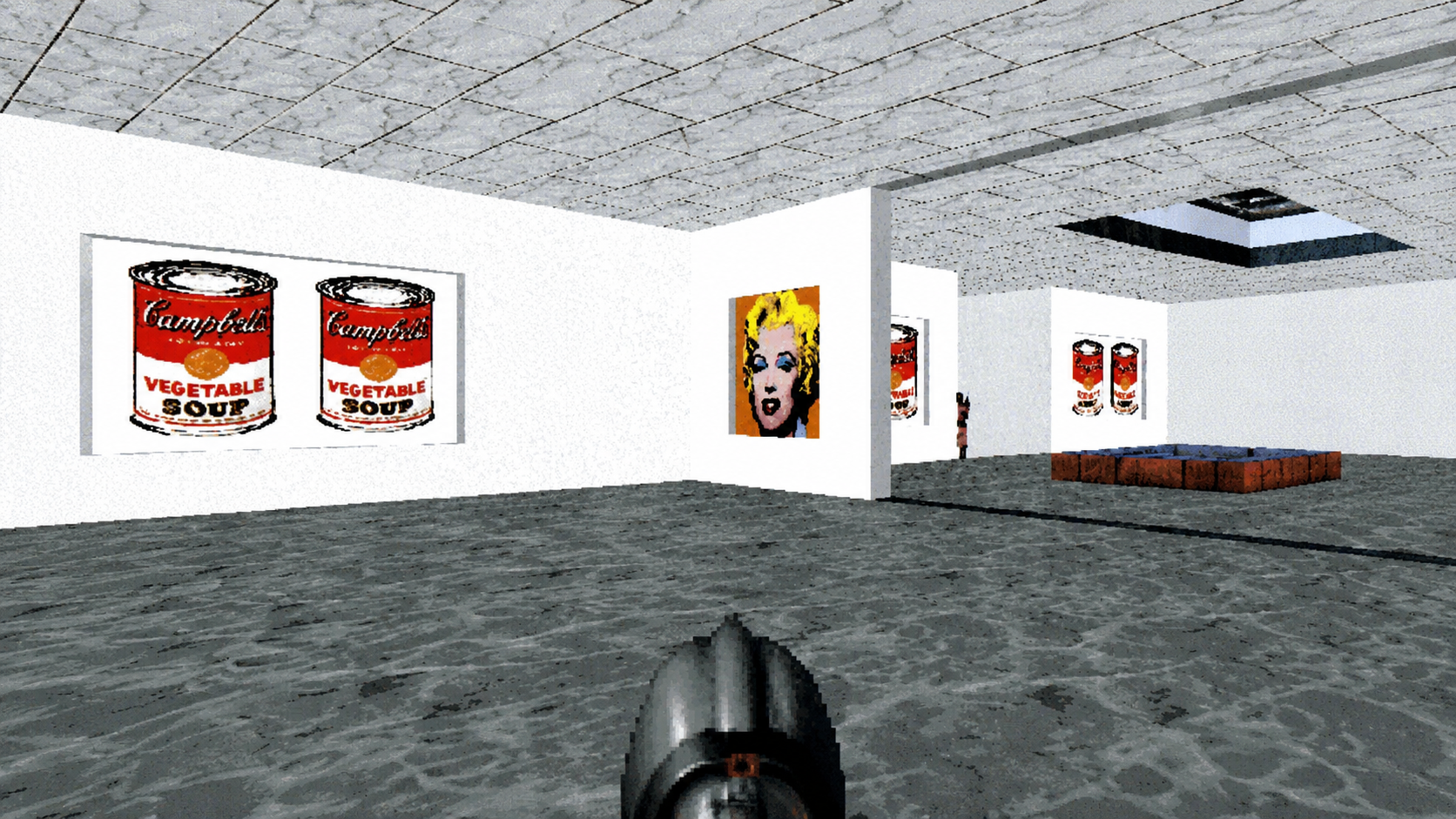
Forge gave me that.
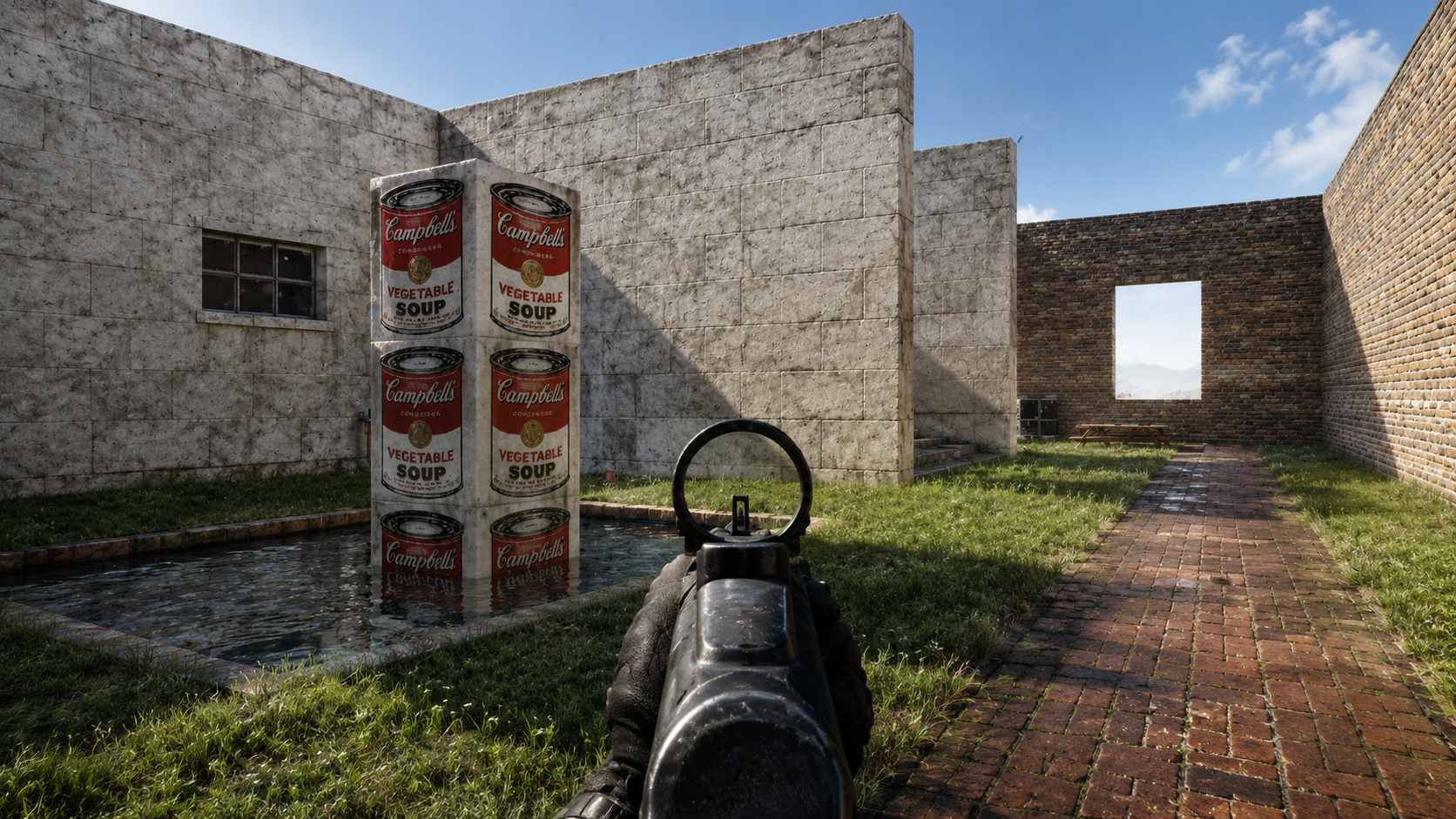
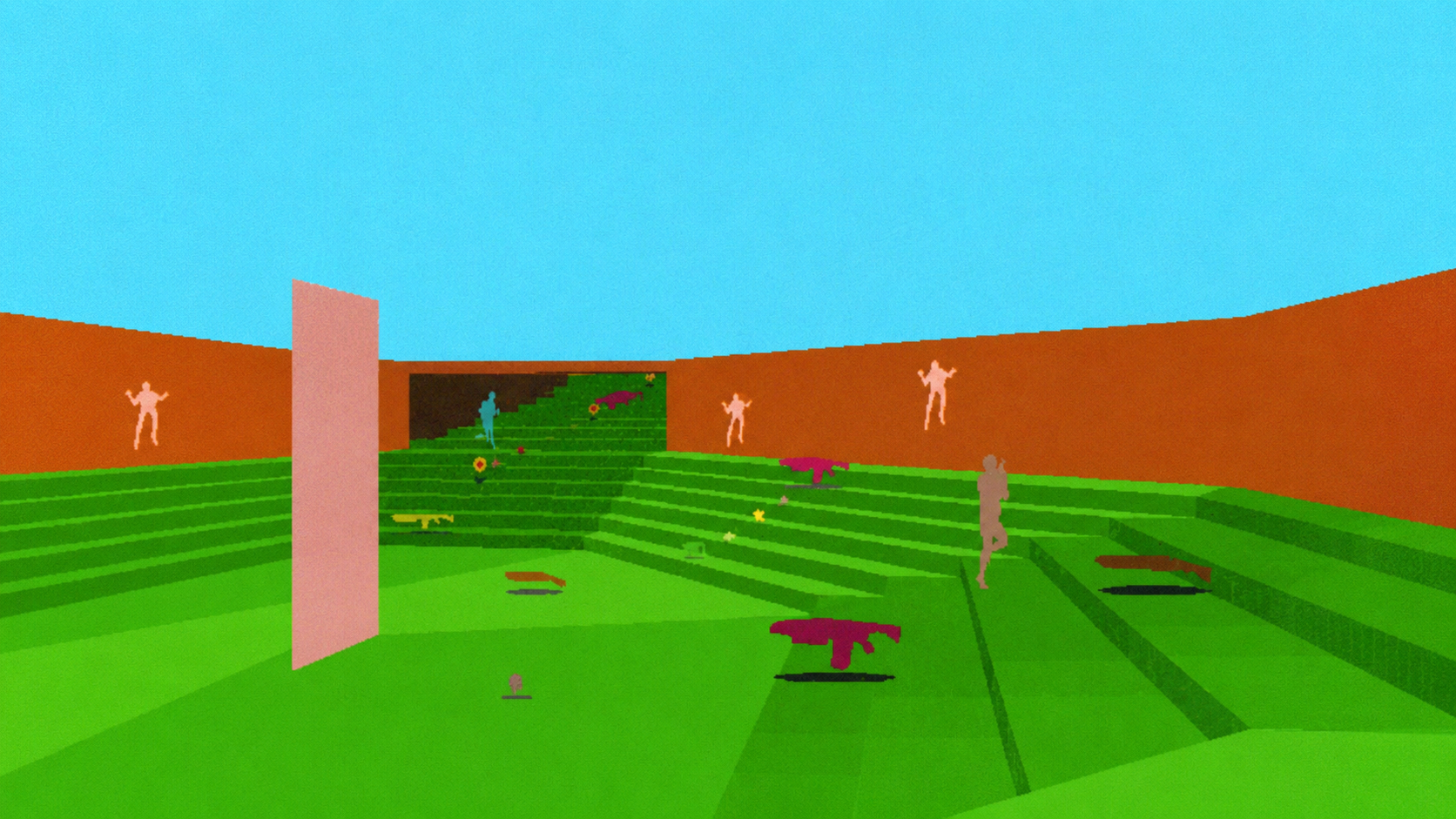
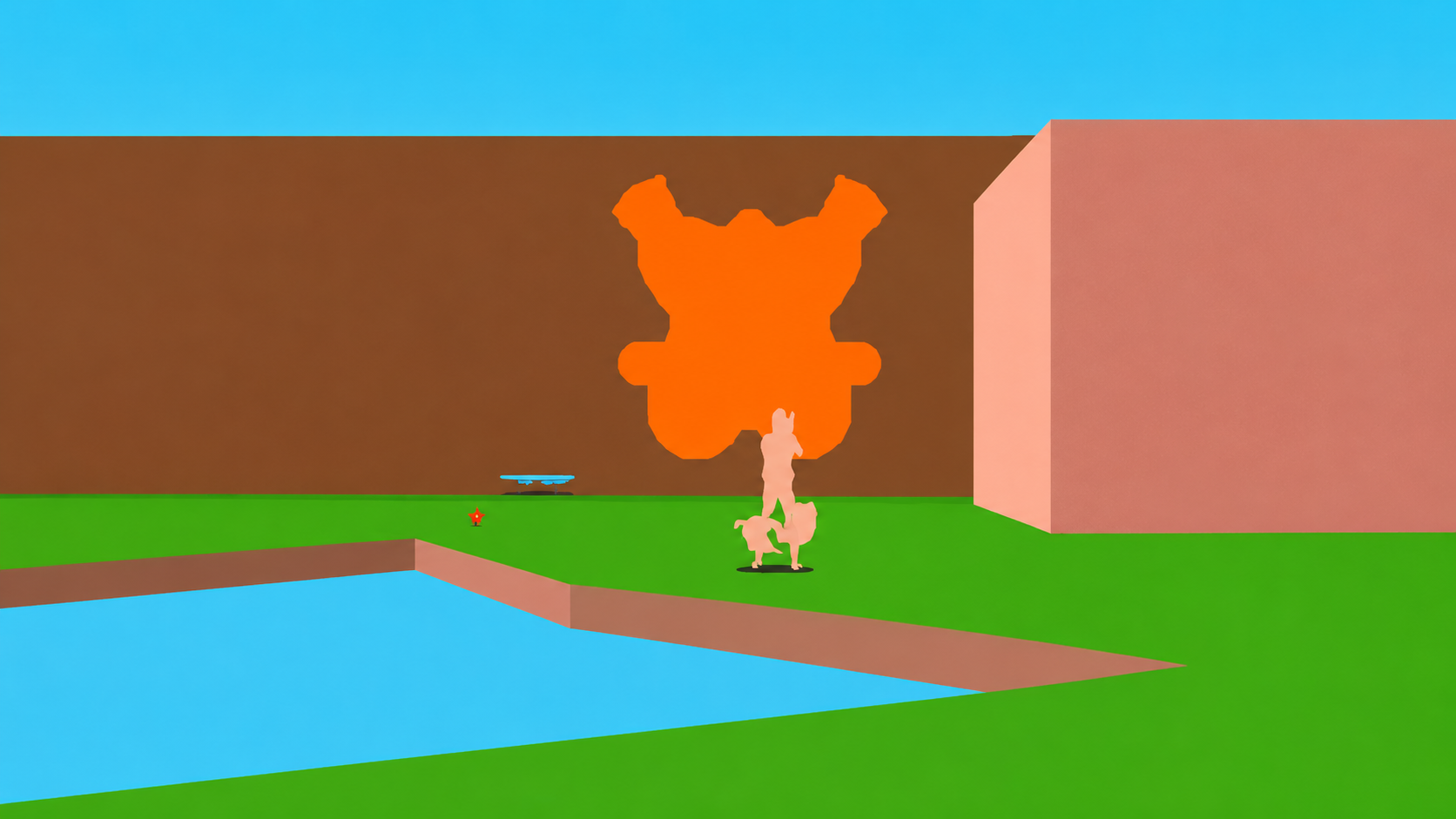
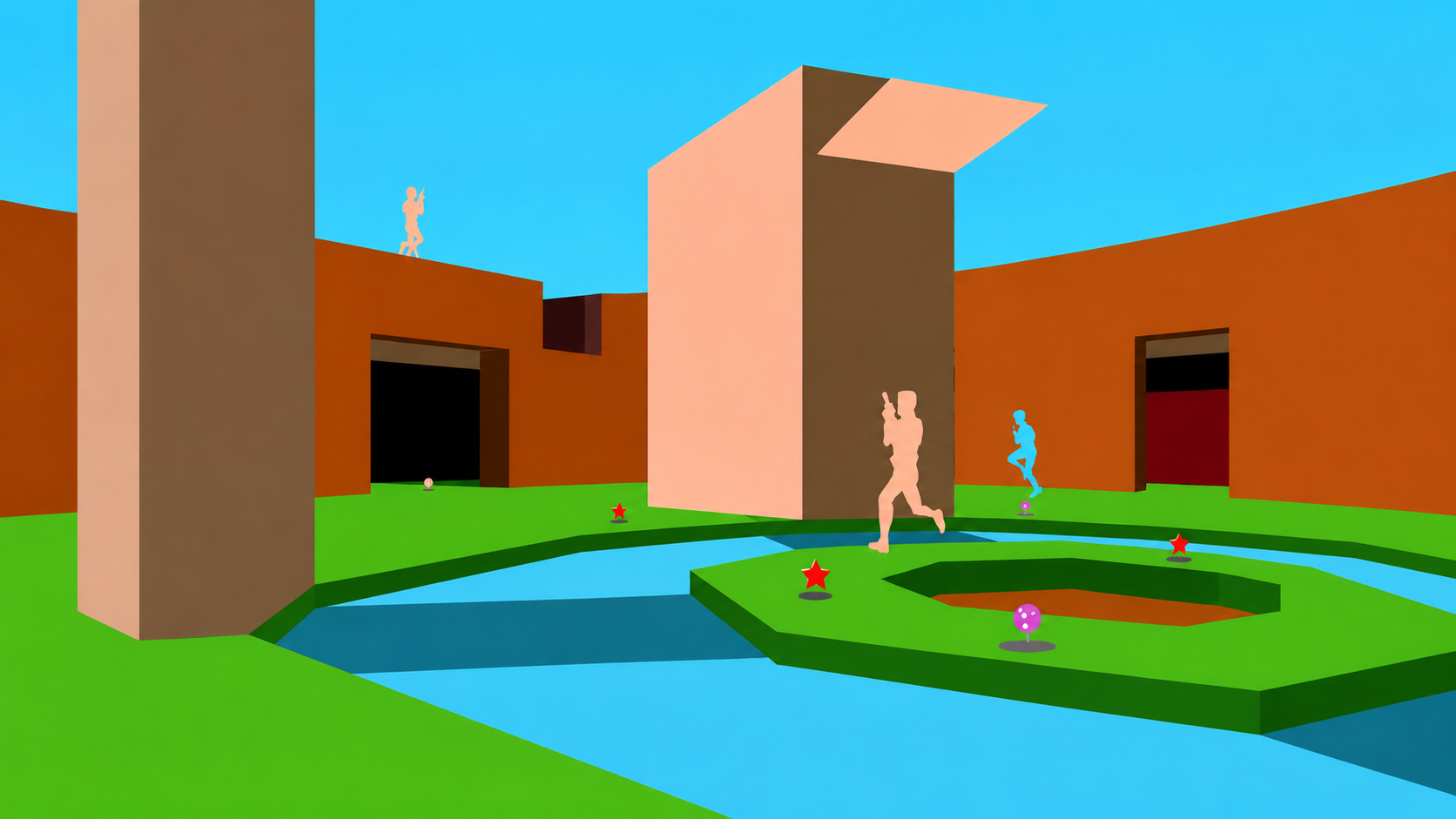
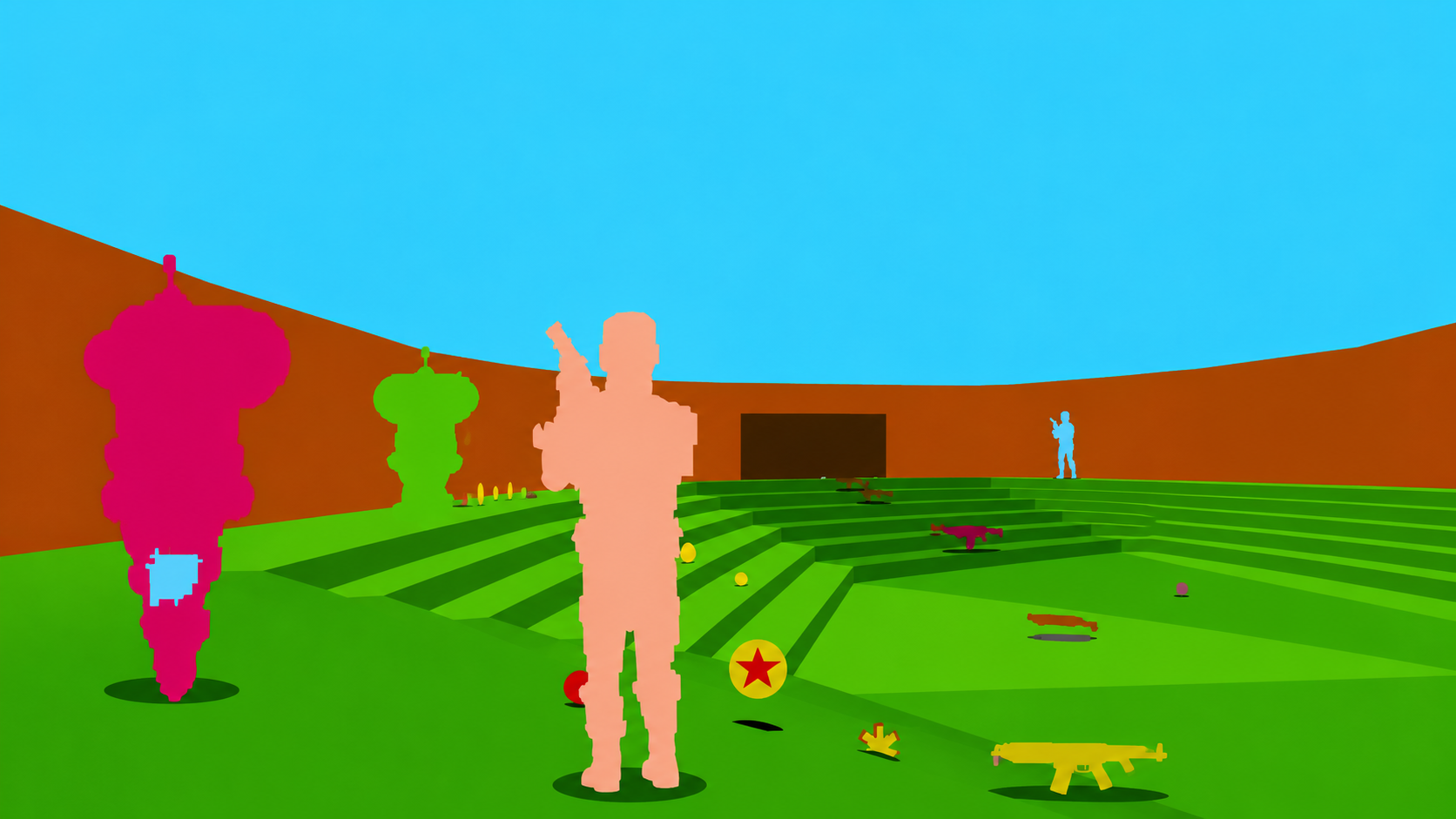
The first environments I built in it were museums. The choice wasn't obvious at the time. I think what I was responding to was the productive contradiction of the idea. A museum is a space for contemplation, for standing still in front of objects, for individual attention in a shared room. A multiplayer game is a space for conflict, for rapid movement, for attention that is perpetually divided because other people are trying to kill you. Building the museum as a game level meant holding both of those things simultaneously. The space was trying to be two things at once, and the tension between them was the work.
The environments that followed varied in scale and reference. The Jan van Eyck Akademie building itself became a level. Lost and Found was built in the De Waag in Amsterdam, the fifteenth-century weighing house that had become an arts space, its medieval geometry mapped onto the movement constraints of a first-person shooter. Some of the environments used sprite-based typographic executions. Words and letterforms placed in the game space as architecture, the text becoming something you moved through rather than read.
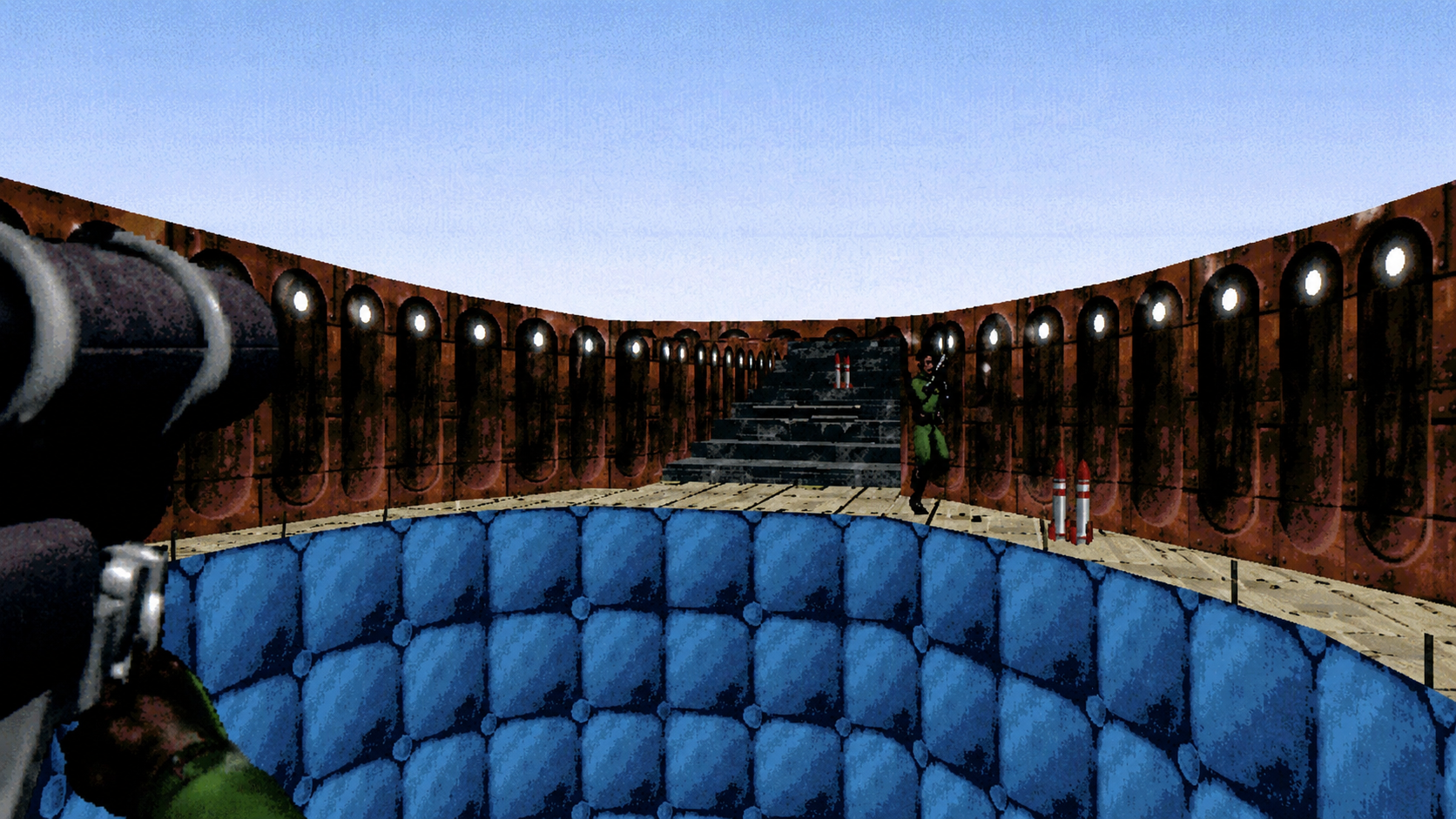
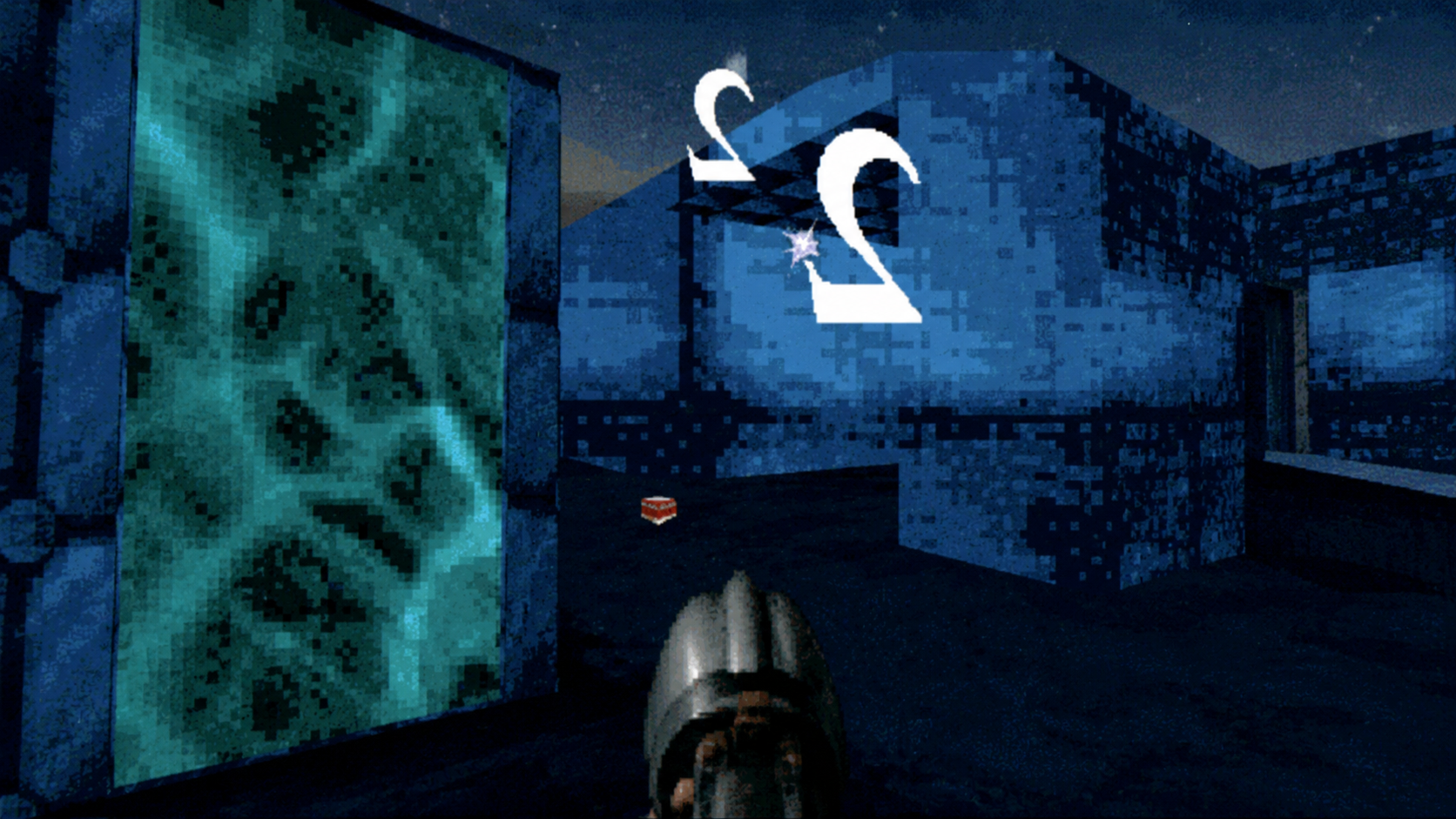
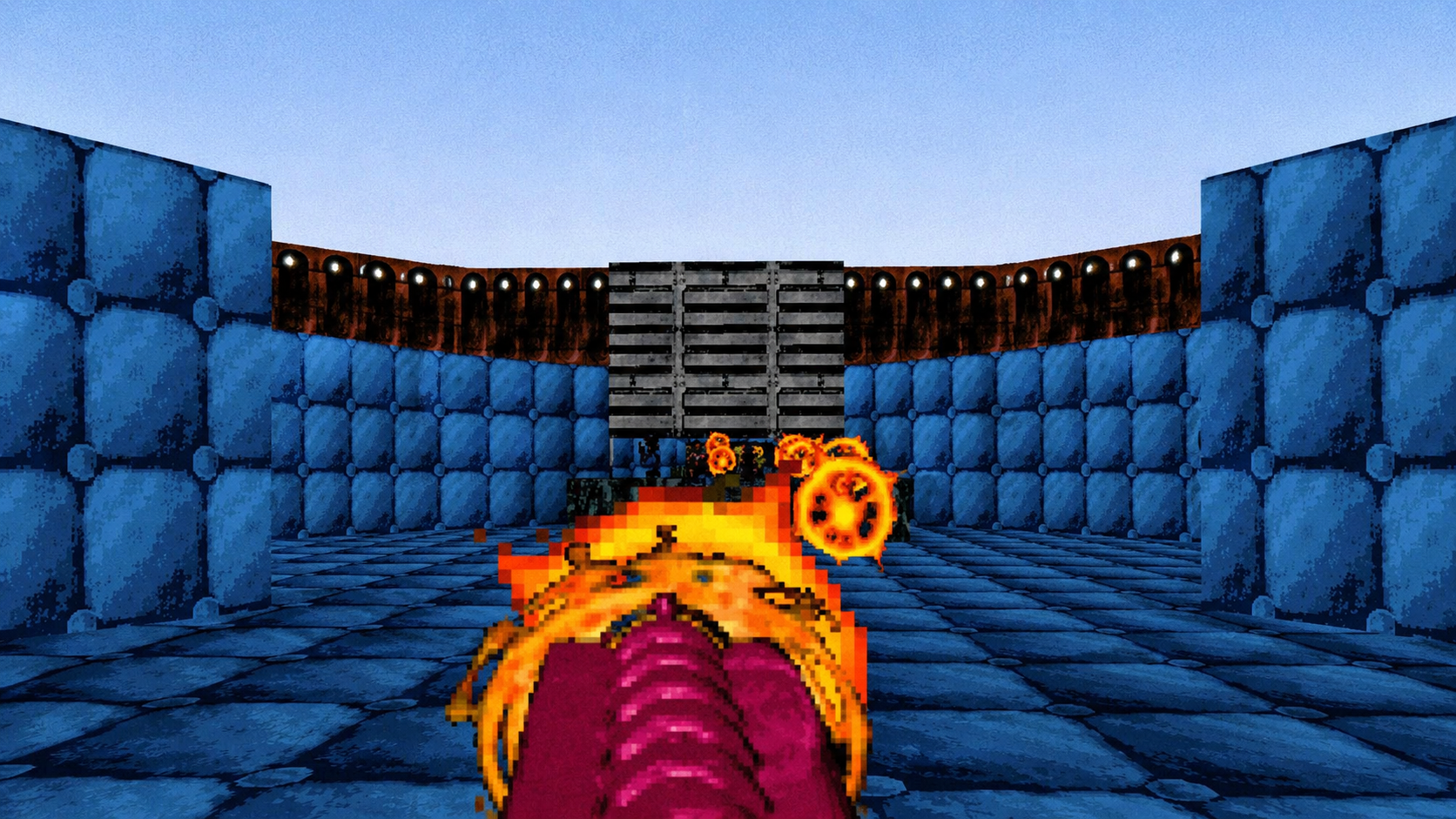
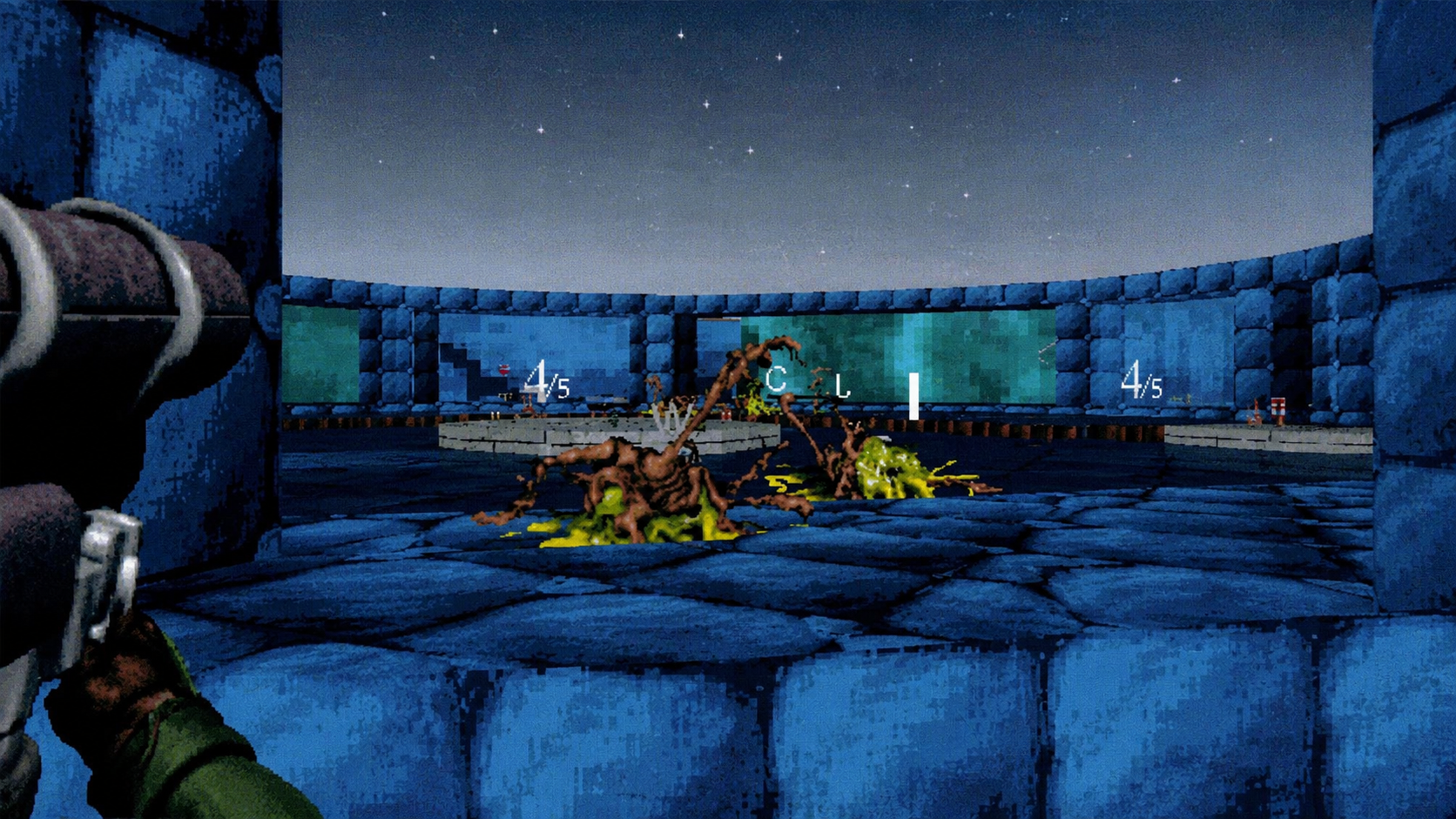
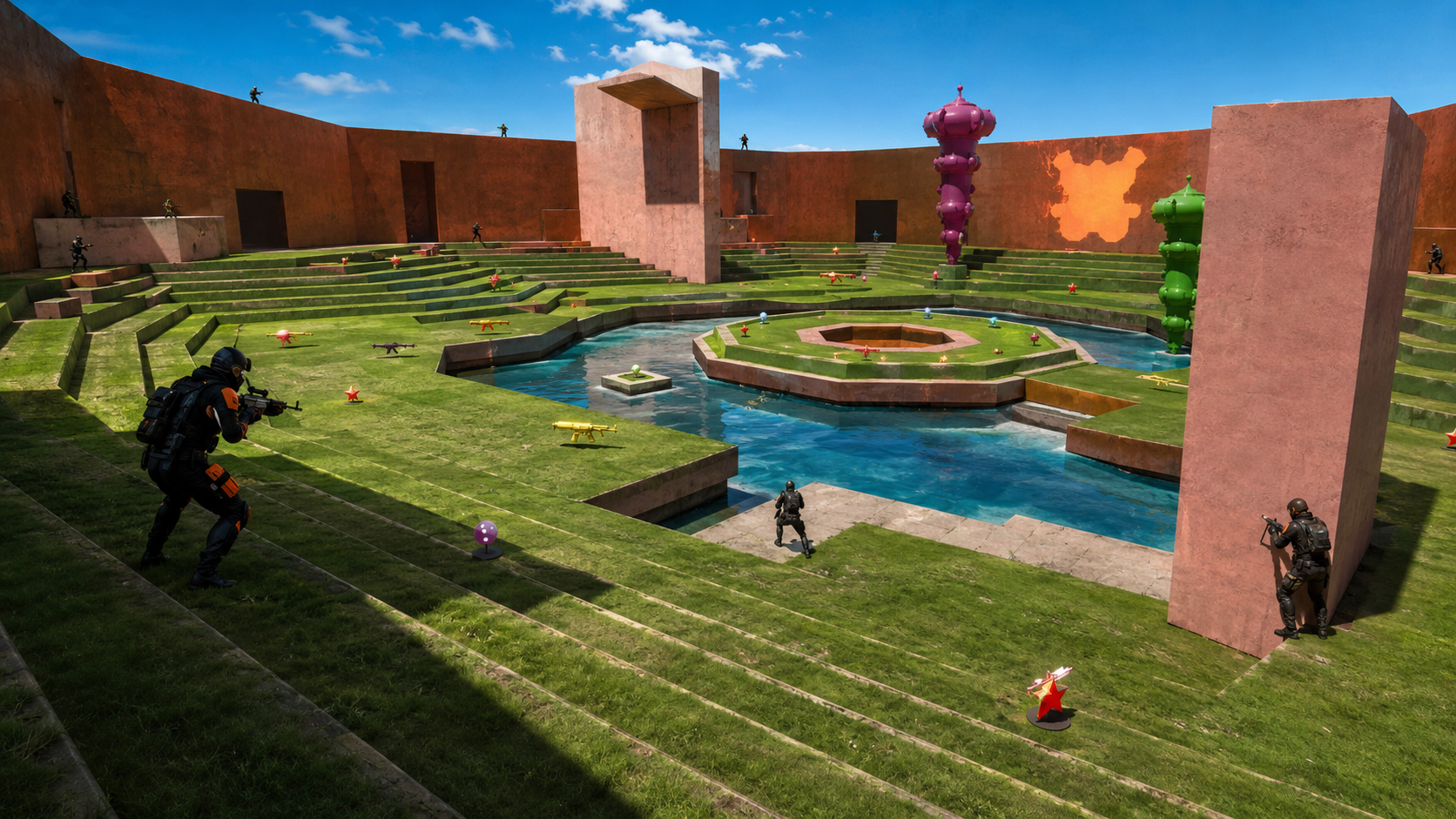
What these environments had in common was a question about what a space is for. The Akademie building is for critique, for discussion, for the slow development of artistic ideas over months and years. The De Waag is a historical object that has been repurposed so many times that its identity is almost entirely about accumulation. The layers of use and meaning accreted over five centuries. When you put them in a first-person shooter, you are asking what the space actually contains, beneath its designated purpose. The answer, in the Marathon engine, was: corridors, angles, zones of visibility and concealment, choke points, sight lines. The spatial logic that makes a building navigable also makes it playable. The contemplative space and the arena share the same bones.
The CD-ROMs I assembled from this period gathered the environments together, packaged with a physical design that treated the documentation as part of the work. The games could be played. The documentation could be read. The disc was both an object and an experience. The Jan van Eyck's design culture was present in the packaging as much as in the content.
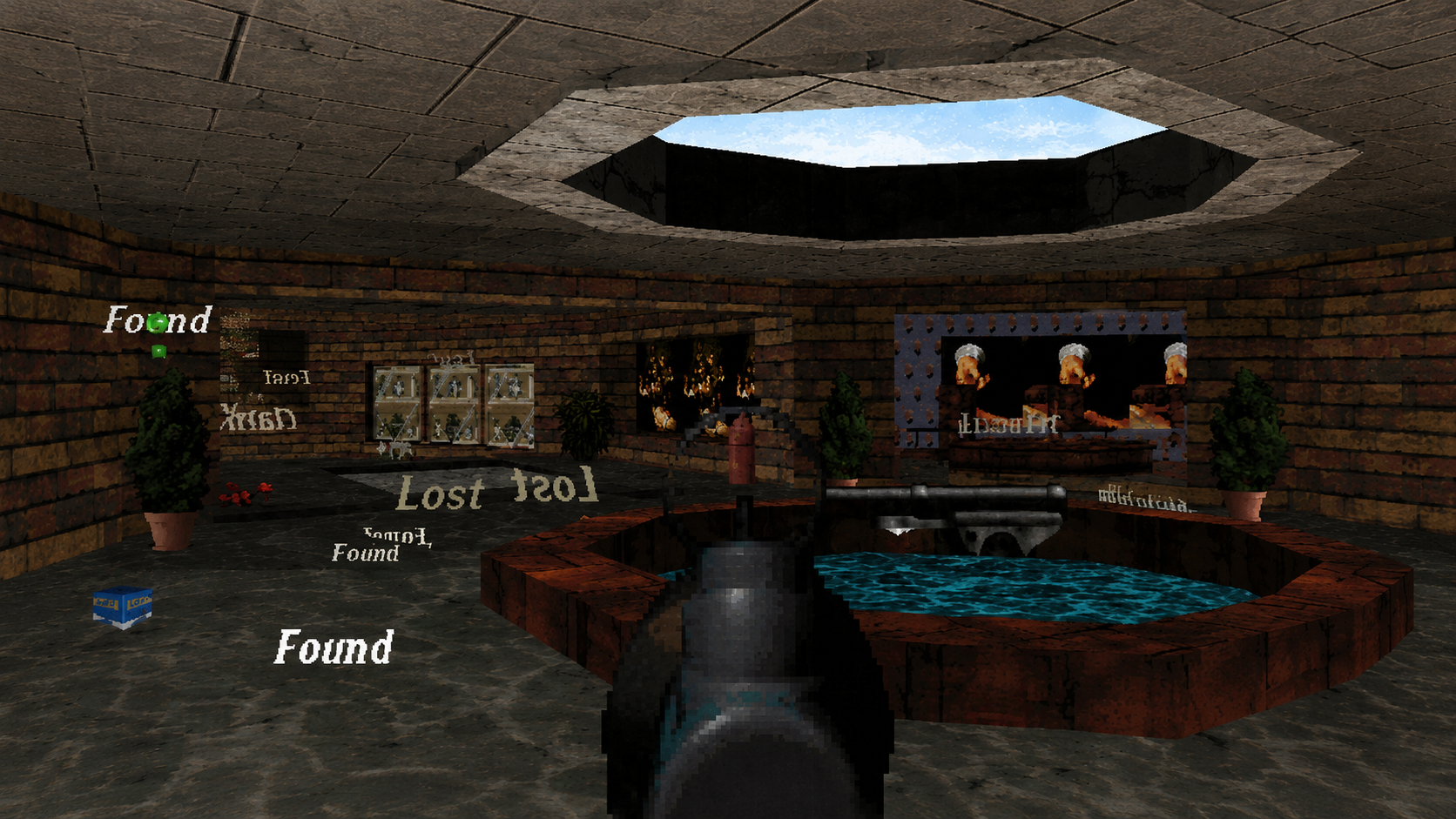
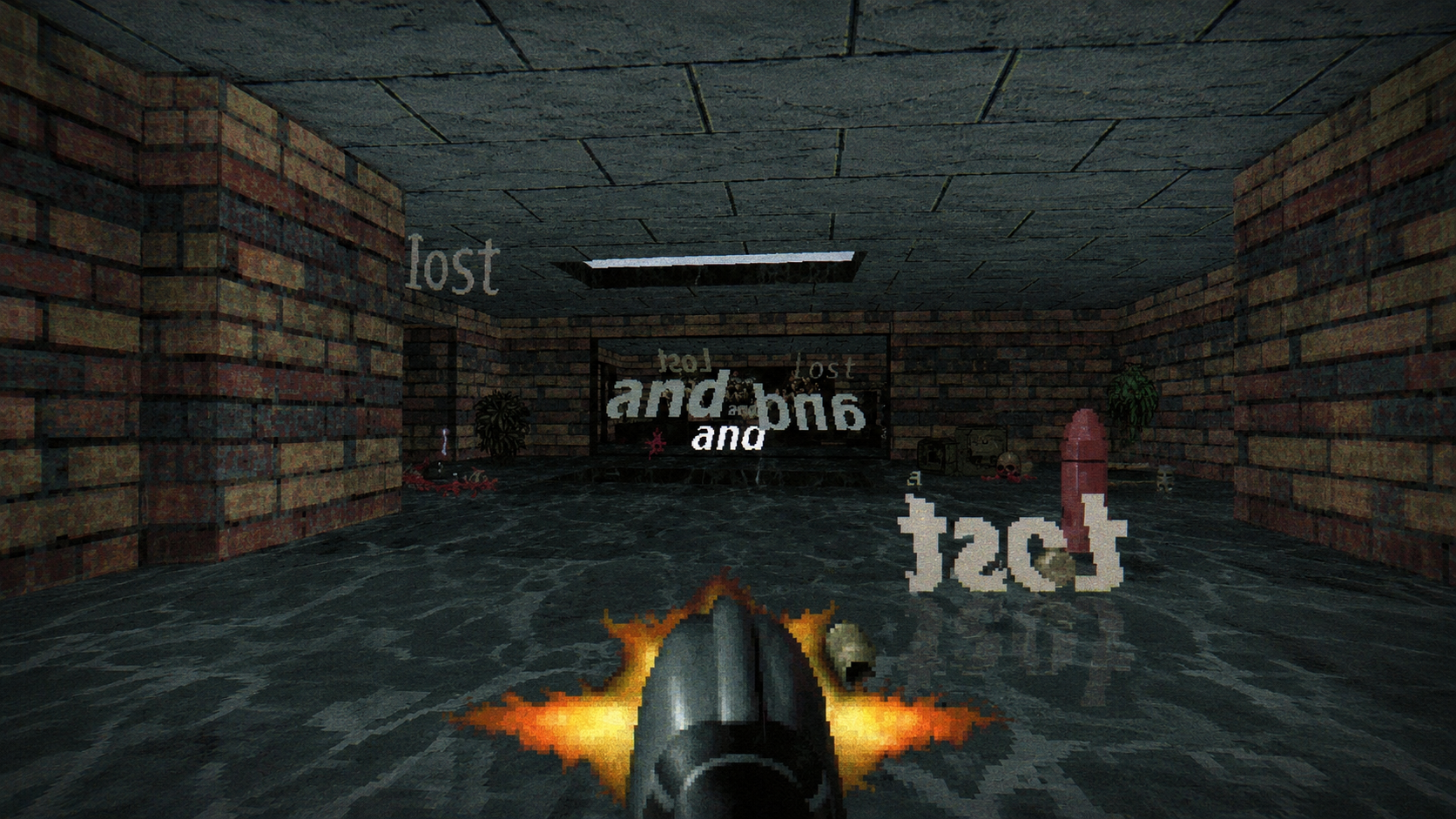
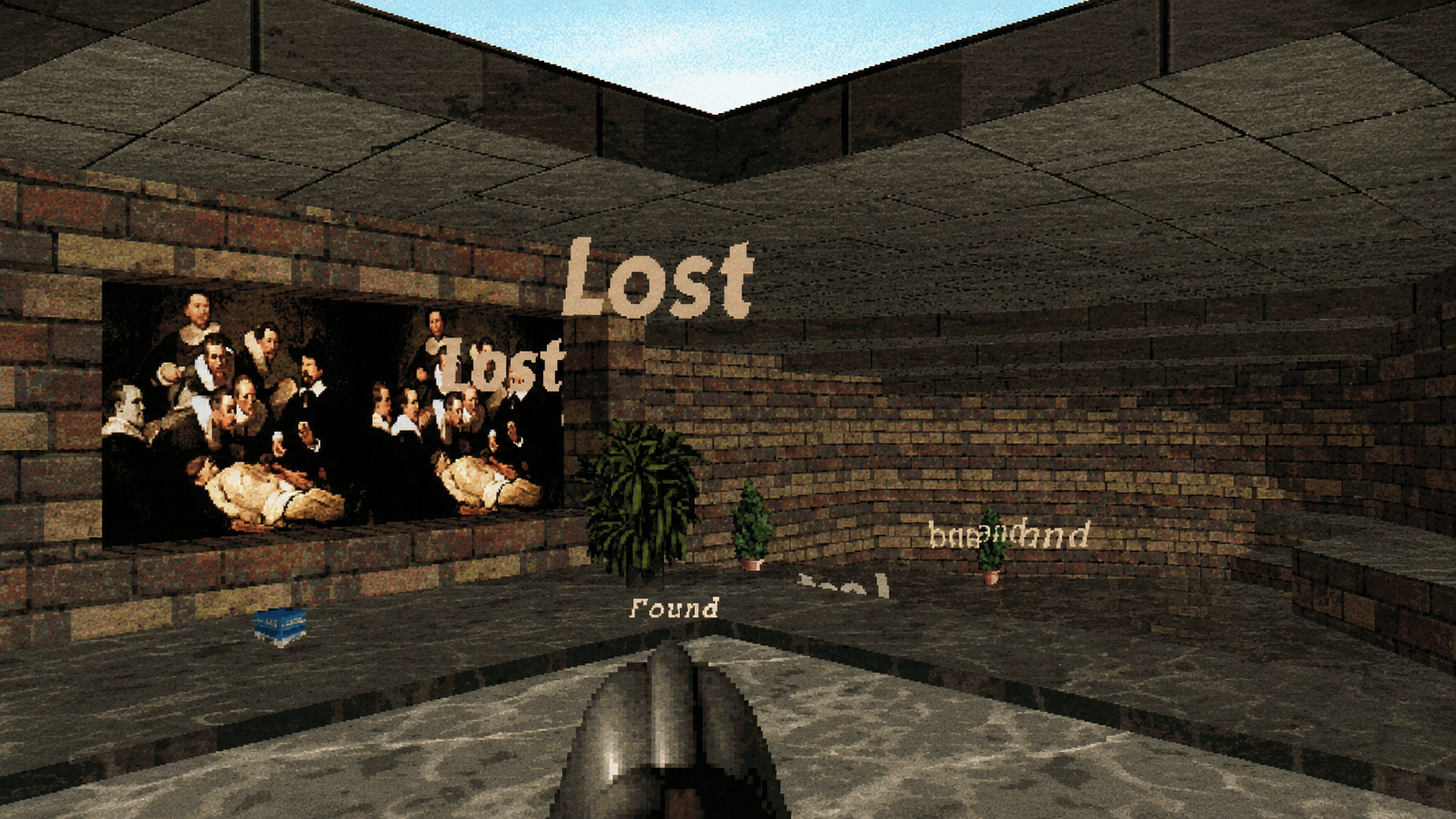
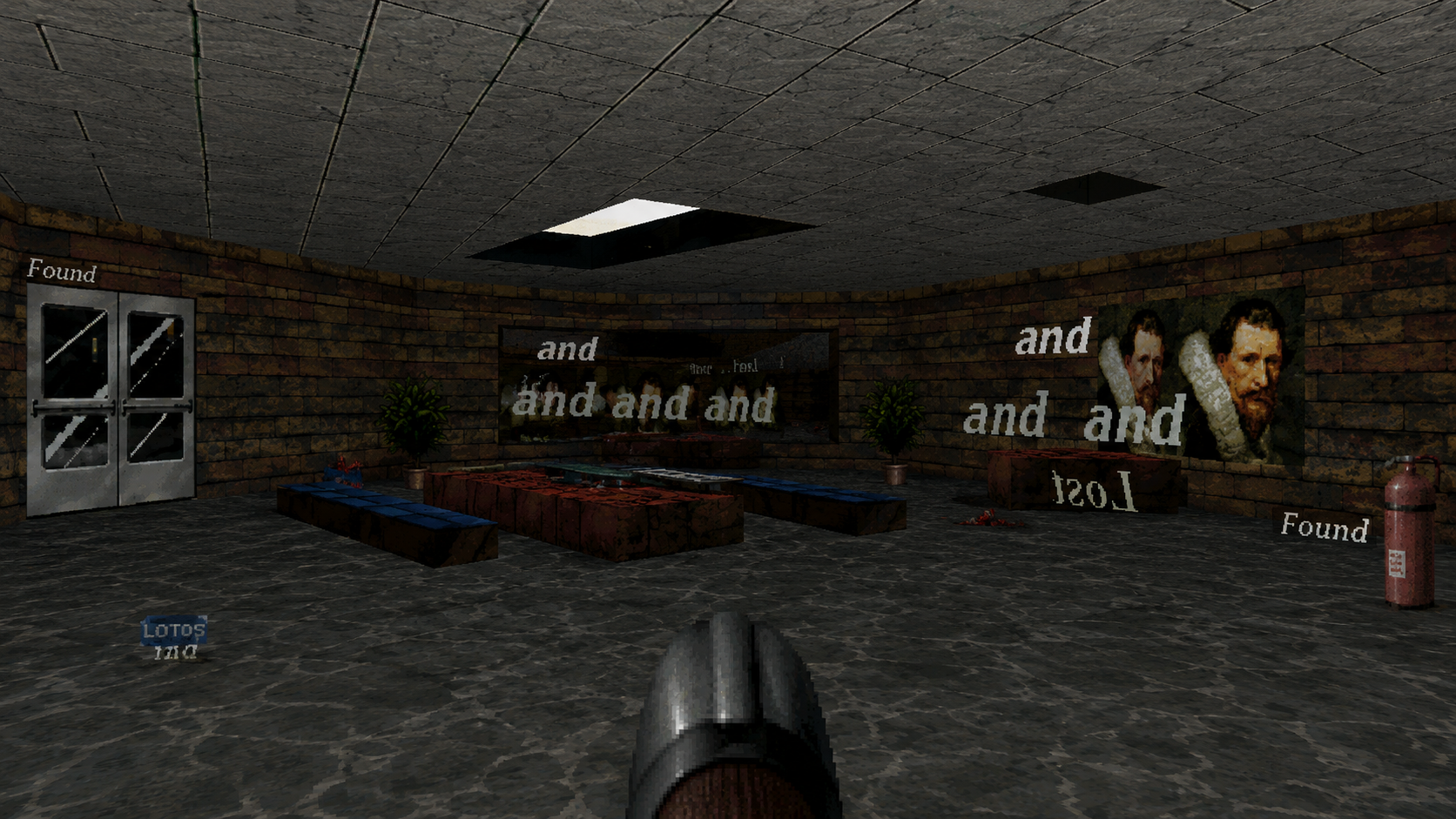
The network dimension changed what the work was about. In single-player mode, you moved through the environments in relation to the computer. The computer provided the opposition, the obstacles, the context. In network mode, you moved through them in relation to other people, and the spaces became something different. The museum acquired the logic of an arena not because the architecture had changed, but because the social condition of the people inside it had. The contemplative space had always been an arena. The game just made this visible.
This is the argument the early network gaming work was making, and it's one that has become more rather than less relevant over the years that followed. The question of what a shared digital space is, whether it is a contemplative environment or a competitive one, whether it enables individual attention or creates conditions for perpetual distraction and surveillance, has moved from a question for art schools and design residencies to a question that organizes the architecture of the platforms that most people use every day.
The museum in the arena was a game level in 1997. It is now the interface of every social network.
I don't think I understood that at the time. I was interested in the spatial question, and in what the Marathon engine would let me do with it. But the residency at the Jan van Eyck was also teaching me something about how design operates — how the formal qualities of a space shape the behavior of the people inside it in ways they can't always see or name. That lesson turned out to be the more durable one. The game levels are documentation now. The design thinking that produced them is still active.